Feeds:
Posts
Comments

Posts Tagged ‘my pump’


Hi,

I can’t believe I have already been on an Insulin Pump for 4 years which means my current pumps warranty is up for renewal and at the moment I use an Animas 2020 pump which has been great.

So I am currently using the New Animas Vibe and hope my blog shares some information that you may find useful.

The Animas Vibe insulin pump and CGM system combines state-of
the-art Dexcom G4 Sensing technology with high-performance Animas pumping. That means it gives you the features Animas® pumps are known for, like waterproof durability¥, fine-tuned dosing and a high-contrast, self-illuminating colour display. It’s also designed to streamline the whole CGM experience for you, while giving you a full-colour view of how your glucose is behaving.

Animas Vibe is designed to give you a more complete picture of your glucose*. In addition, its packed with a unique combination of features designed to help you perform at your best.

20120405-213828.jpg

I didn’t realise that the pump needed to be replaced after 4 years and was a little worried that it may not be funded again but my hospital at High Wycombe are very good and sorted everything out for me very easily. I had been speaking with Caroline and Jill from Animas about renewing my Animas 2020 pump and that I would like to try the Animas Vibe with CGM which they arranged for me.

20120405-214055.jpg

My day started at High Wycombe Diabetes Centre with Caroline, Jill and Una (DSN) on Monday 30th January 2012, as you can imagine I was very excited indeed. My old pump was really difficult to read the screen which had put me off the Animas pump but what I discovered was that the screen on my old pump had burnt out so needed replacing (That was a relief and of course Animas said they would replace it). We went through the functions of the new Animas Vibe pump which is pretty much the same as the Animas 2020 apart from the fact it has CGM so I already had a head start, I love how easy the Vibe is to use and the fact you have a nice clear colour screen especially when looking at the CGM trend graph as pictured above. The team at Animas and Una were really great and went through everything with me especially on how to use the CGM and inserting it, I am just so frustrated that I can’t get funding from the PCT for CGM.

The actual insertion of the sensor is very easy and didn’t really hurt at all but more of a scratch which I was pleasantly surprised with, the sensors are recommended to be placed on your tummy and not on your back which makes it easier to insert. I did however have an issue with the first sensor which must have hit a blood vessel as a couple of hours later the CGM alarmed to say it was not working, I spoke to Animas who said to change the sensor as when I was with them it looked as though it had possibly hit a small blood vessel. The setting up of the CGM was very easy once the sensor had been inserted and I actually managed easily on my own. The sensor last for 7 days and alarms to let you know once the 7 days has finished, I like the fact you can wear it for 7 days without changing. The second sensor I used went in perfectly and I had no problems at all and again was like a sharp scratch so no pain really.

In regards to the results given by the CGM please remember that the CGM is really to be used to give trends rather than exact blood glucose readings, at the end of the day pricking your finger is still the most accurate. My results compared to finger prick testing were out by quite a way to be honest (not all the time though) but I had been suffering with a nasty chest infection for over a week then travelled to Sweden for a few days, this probably didn’t help with the results so I do hope I get another chance to test the CGM now I am well – we shall see. I have one sensor left as of today Monday 27th Feb and plan to use this after my next Diabetes check up and I will then have used my months trial and can upload my results for my DSN.

So would I use CGM if it was funded by the PCT – yes most definately as it made me feel a lot less worried whilst travelling knowing it would alarm if my BG level was too low.

I hope this helps and hopefully I will get the chance to try some more sensors while I am feeling well but watch this space. Please email or comment if you have any questions at all.

Many thanks

Andrew Borrett
www.mypump.co.uk
www.mypumpblog.com

Read Full Post »


INPUT Insulin Pump Exhibitions 2012
Any (insulin pump) Question Answered

Have you heard about insulin pumps and wondered how to find out more about them? Do you have questions about what it’s like using a pump? Would you like to see in real life the makes and models of pumps you’ve heard about? Or do you have questions or concerns about NHS funding for pumps? Your chance to chat with pump users and pump company representatives about all these topics (and more) could be just around the corner at an INPUT roadshow!

Current Venues and Dates (further information on venues below). More dates and venues being added soon.

20120315-214310.jpg

Luton – 14th April 2012
Chester – 19th May 2012

Time: 1pm – 4:30pm
Who: open to all people with diabetes and their family members or carers who want to learn about the principles and practical aspects of pump therapy over a cup of tea or coffee.

We have invited the following companies to exhibit:

Abbott (Freestyle Navigator)
Advanced Therapeutics (Dana & Dexcom)
Animas
Cellnovo
Medtronic
Roche
Ypsomed (OmniPod)

****

Luton – Saturday 14th April 2012
Venue: Hilton Garden Inn Luton North Hotel, LU2 8DD

***

Chester – Saturday 19th May 2012
Venue: Macdonald New Blossoms Hotel, Chester, CH1 1HL.

Read Full Post »


‘Feet first’ for diabetes patients

As a new study highlights major variations in diabetes-related foot amputation rates, Barbara Young, chief executive of Diabetes UK, explains why action is needed to cut rates of preventable amputations.

If I were to tell you about a place where thousands of feet were amputated every year as a result of poor healthcare, you would assume I was talking about somewhere in the developing world.

Well you’d be wrong. The fact is that here in the UK, thousands of people with diabetes have amputations every year.

Not only does an amputation dramatically reduce quality of life, but the likelihood of dying within five years is greater than for breast, bowel or prostate cancer.

And yet an estimated 80% of the 5,000 diabetes-related amputations a year in England could be prevented through better healthcare and improved management of the condition.

The fact that so many people are needlessly having their feet amputated is a national disgrace. And yet despite the large numbers, awareness of the problem is worryingly low even among people with the condition.

But it does not have to be like this.

The scandal of preventable amputations is one we hope to bring to an end with our Putting Feet First campaign. Over the next five years, we want the number of amputations in people with diabetes to reduce by 50%.

Raising awareness of the issue will be a big part of this.

‘Insufficiently thorough’
The 2.8m people in the UK who have been diagnosed with diabetes should know how important it is to manage blood glucose levels, cholesterol and blood pressure well, as well as checking feet regularly and making sure shoes fit properly.

But they also need to know what healthcare you should expect – because all too often it falls short of what people are entitled to.

Firstly, everyone with diabetes should get an annual foot check.

These are important for identifying problems at an early stage, but many thousands of people are not getting them. And when they are being done, they are sometimes insufficiently thorough.

I have even heard of foot checks where the patient is not even asked to take their shoes and socks off!

Also, at the end of the check patients should be told what their risk status is, so if this does not happen then you should ask.

Secondly, if you have a foot ulcer then you need to be seen by a diabetes specialist foot care team as soon as possible.

It should certainly be within 24 hours, as an ulcer can deteriorate in a matter of hours.

Some areas are already doing well in terms of getting diabetes-related ulcers referred to these specialist teams within 24 hours.

But there are also poorly-performing areas where this does not happen.

Tragically, that omission can be the difference between someone keeping their foot and losing it.

If people with diabetes are not offered this level of care, they should insist on it and complain if they don’t get it.

But the point is that decent healthcare is something everyone should get as a matter of course.

For this to happen, we need to address the reason that large swathes of the country are doing so badly.

We know from speaking to health professionals that many of them are desperate to give people with diabetes the best possible foot care but feel unable to do so under the existing system.

This is why the government needs to show leadership on this issue by insisting that all areas of the country offer the same standard of care that is already available in the best areas at the moment and monitoring and managing standards to ensure that they are being delivered.

This greater political will is the only way to bring an end to the tragic postcode lottery of amputations and in doing so create an NHS that really does put feet first for people with diabetes.

Read Full Post »


The importance of regular eye checks – by Tim Harwood

Author: Sarah Steel at Diabetic Friend

Why is it important for diabetics to have regular eye tests?
As diabetics we constantly have all kinds of advice thrown at us in an almost threatening kind of way! We are told that unless we follow certain pieces of advice we risk all sorts of bad things to us … Such advice comes at us from many different people including the GP, diabetic nurse and the podiatrist. Well unfortunately this article plans on doing very much the same, although the person doing the advising is the Optometrist!

Depending on the area you live in, most diabetics should be on some sort of diabetic retinal screening programme which your GP should enrol you on. Diabetic retinopathy is the biggest cause of blindness (apologies for this depressing fact!) in the working age range and this is why it is so important that you have regular checks for it. Clearly this is the negative side of diabetic retinopathy but the positive side of diabetic retinopathy is that it shouldn’t be the biggest cause of blindness in the working age range as it generally can be treated. Providing your diabetic retinopathy is picked up early enough by either your Optician or retinal screener is it likely to be treatable.

What exactly is diabetic retinopathy?
Diabetic retinopathy is effectively a disease of the retinal blood vessels at the back of your eyes. The result of the disease is that the blood vessels become weakened and are therefore are more likely to leak and haemorrhage. If this occurs then there is an interruption to the blood flow (and therefore oxygen) of the retina and consequently vision can be lost. In addition to this, if the diabetic retinopathy is left untreated the retina will produce new blood vessels in response to a lack of oxygen in the retina. These new blood vessels are however even more fragile and ‘leaky’ then the normal blood vessels, further exacerbating the problem.

Having said this, not all diabetics suffer from diabetic retinopathy. Around 40% of diabetics will suffer from diabetic retinopathy to some degree and this most likely if you suffer from type 1 diabetes. The single most important factor in reducing your chances of developing retinopathy is by controlling your blood sugar levels. High blood sugar levels for long periods of time will put you at a much higher risk of developing the disease.

Why have regular eye tests?
The main problem with diabetic retinopathy is that you may have it right now and be completely unaware that you do. There may be diabetic retinal changes that are only affecting your peripheral vision and so consequently you will not notice it. These peripheral changes tend to accumulate and then all of a sudden your central vision becomes damaged and there is very little that can be done about it. By attending for regular eye tests/retinal screenings, the Optometrist can detect the early retinal changes which can be treated before they affect your central vision. Unfortunately once your central vision is damaged there is often very little that can be done about it. If there are significant retinal changes in your peripheral retinal then you will be assessed to see if laser treatment will be beneficial to you. This is not however the laser eye surgery that you see advertised on the TV as it in no way corrects the prescription in your glasses. The aim of diabetic laser treatment is to prevent your diabetic retinopathy from affecting your central vision. In summary your Optician can pick up and monitor any early diabetic retinal changes and act on them before they affect your central vision. By attending for an eye examination every year you are massively reducing your risk of developing any visual problems. If you combine this with keeping a tight control of your blood sugar levels, there is no reason that you should ever have any diabetic retinopathy problems.

This article was brought to you by Optometrist Tim Harwood. Tim has monitored people with diabetic retinopathy for over 10 years and has seen significant improvements in the treatments that can be offered. Tim also writes articles for his own website Treatmentsaver which covers a whole range of topics including a laser eye surgery forum for which he is the moderator. I hope this article has made you realise that by taking a few simple steps you can significantly reduce your risk of developing the disease. This article was not meant as a lecture more as in inspiration that if you do right things your vision should be unaffected for life!

Read Full Post »


Hi all,

So the end of British Summer time has finally hit us all with vengeance and at 5.00pm tonight it was almost dark which is awful.

As you may already know I have had numerous trips to eye clinics due to suffering with Diabetes Retinopathy for the past 7 years which is really awful and was a real scary shock when I was first told, it was Vision Express that actually discovered the problem and instantly booked me into my Diabetes eye clinic. The problem really started after I had small blood vessels at the back of my eyes burst which affected my vision and made it very cloudy in both eyes. The treatment started with laser to burn around the blood vessels which prevents any new weak blood vessels from forming which then burst. Laser itself is very uncomfortable indeed and I have had approx 10,000 burns in each eye which I am told is the limit but this does seem to have stopped the bleeding which is great news and I am so thankful to the Eye Specialists. After all the laser it still left my vision cloudy so meant I had to have what’s called a Vitrectomy in each eye which basically entails having the clear jelly in your eye removed (Your eye replaces this fluid), I can honestly say this operation is not nice at all and means you have dissolvable stitches in your eyeball (Gross I know). Having said all that If this had not been done I would certainly not be typing this Blog even though one eye has very poor vision and both eyes have awful night vision.

So to the present day – my eyes seem to be stable at the moment and my latest eyesight test did not show any problems, even my prescription had not changed apart from my short sight vision which has got slightly worse. My next Diabetes eye check up is at the Western Eye Hospital in a few weeks time so fingers crossed I get the all clear but I am a little worried.

One of the worst things I am left with is very poor small detail reading in both eyes meaning typing Blogs like this I have to have the page zoomed in to make the words larger, damage to my central vision in my right eye meaning details in my right eye is near on impossible to read, also my night vision is really bad and means I am unable to drive in poor light so this time of year is even worse as it is dark late afternoon. It means I have to carry a very bright torch with me that literally lights the whole path/road that cost me a fortune and even then it is really hard to see if I am on my own walking home from work, without a super bright torch I would literally be stuck and please let me know of any pocket torch companies who make super bright torches. We just take our vision for granted and I am also guilty of this in the past.

Thanks for reading and please feel free to comment.

Andrew Borrett

Read Full Post »


Animas pumpers complete Channel Swim Relay.

The purpose of the Animas Channel Swim Relay challenge was firstly to
raise money for the Juvenile Diabetes Research Foundation (JDRF), but equally to
celebrate people with Type 1 diabetes performing at their best. The team was
made up of three swimmers with Type 1 diabetes, using Animas® Vibe™
insulin pumps; Mark Blewitt, Matt Cox, and Claire Duncan. They were supported by
two, experienced channel swimmers, Pawel and Boris, as well as 17-year-old
Lorcan who will be attempting his first solo crossing this
August.

At 1:45 am on Thursday, July 21, 2011, the first swimmer lowered
himself into the cold water at Dover Harbour on England’s southeast coast. The
Animas Channel Swim Relay was underway. After months of training and
preparation, Mark, Claire, and Matt were about to take on one the biggest
challenges of their lives. The 21-mile swim across the English Channel is one of
the most famous and arduous swims on the planet and those of us offering our
support from the dockside were relieved it was them rather than us, especially
as the news had been reporting an unusually high number of jelly fish in the
English Channel.

Just a few days earlier, we had been wondering whether the swim would
ever happen. Our original swim date had been postponed a couple of times due to
bad weather, and with a number of other groups waiting for their chance to swim,
we worried that we may have had to wait a few weeks before we got another
chance. Then, on Monday, July 18th, with just three days notice, we got the call
to say it was “all systems go.”

On Wednesday evening, the swimmers, plus a large support crew of
friends, family, and Animas representatives, congregated at a hotel in Dover.
There was excitement among the swimmers, but also naturally some trepidation at
the challenge that lay ahead. The pilot of the support boat, which accompanies
all Channel Swims, gave the team their final briefing and then it was time to
go.

Each swimmer was scheduled to be in the water for hour-long spells.

The first into the water was Mark, and as the rest of the team
boarded the support boat with photographer in tow, he took his first strokes
towards the coast of France.

Once the swimmers were out of sight, it was our job–those left on
dry land–to keep everyone back home up to date with the team’s progress.

By using a live GPS tracking link and regular calls and texts to the
support boat, we were able to provide a running commentary of their journey via
a dedicated Facebook page. The regular updates made for great reading and the
team’s terrific swimming meant they were making great
time.

At 3:04 pm, the final strokes were made. The team reached the French
shoreline at Cap Gris Nez, a small outcrop of land between Calais and Boulogne.
The swimmers endured 13 hours and 26 minutes in water temperatures as low 15
Celsius /59 Fahrenheit and had run the gauntlet of seaweed and jellyfish. As
soon as we got word, we relayed our congratulations back to the boat team and
uploaded the great news via the Facebook page.

The swimmers’ return journey by boat was naturally much quicker than
the outbound leg, taking just four hours, and when they reached Dover we were
there to welcome them and begin the celebrations.

Our swimmers can be proud to have raised over 4,000 GBP for a great
cause and they most certainly demonstrated that having diabetes shouldn’t stop
anyone from taking on a challenge of a lifetime. I think swimmer Matt Cox put it
best when he said, “My son was diagnosed with diabetes and I’m hoping this
challenge will help Jack and other people with diabetes strive to achieve
exactly what they want in life.”

Huge congratulations to everyone involved and don’t forget, you can
still donate to the cause by visiting www.justgiving.com/animas-swimmers

Sincerely,

Animas UK/Ireland Team

Read Full Post »


Exciting times and I am looking forward to hearing more about the New Cellnovo Insulin Pump or maybe even a trial ?

Cellnovo Receives CE Mark Approval for World’s First Mobile Diabetes Management System
19th Sep 2011

Cellnovo Receives CE Mark Approval for World’s First Mobile Diabetes Management System

Press Release

September 19, 2011, London, UK. Press Dispensary. Cellnovo today announced that it has received CE Mark approval for the world’s first mobile diabetes management system, a significant milestone for the company and for people living with diabetes.

“This is Cellnovo’s first step in a journey to bring this mobile diabetes management system to the world,” says William McKeon, Chief Executive Officer of Cellnovo.

20110919-134910.jpg

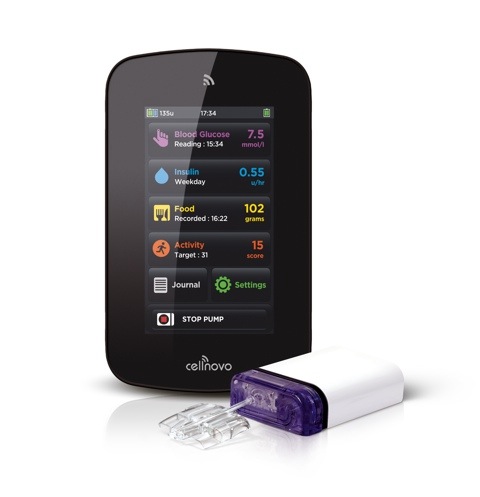
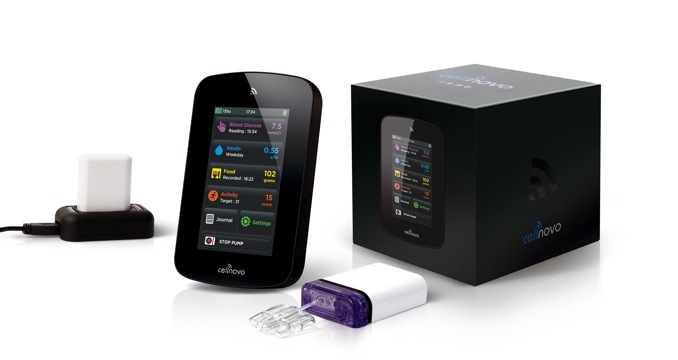
Cellnovo is a complete diabetes management system built around the principles of mobile, wireless technology. The system includes an insulin patch pump, a wireless, touch screen handset with a built-in blood glucose monitor, and an extendable applications set.

“Cellnovo has created the first insulin pump that brings innovation and combines form with function, essential qualities in a device that patients have to interact with 24/7,” says Dr. Pratik Choudhary, Clinical Lecturer in Diabetes at King’s College London.

Cellnovo’s ground breaking technology means that diabetes therapies can now be managed more easily, accurately and intuitively. The patch pump is the smallest and most precise ever developed, and the touch screen, wireless handset is instantly familiar to those who have used other mobile devices such as Apple’s iPhone.

20110919-135514.jpg

“Cellnovo has combined advanced mobile and medical technology which may create a paradigm shift in diabetes care,” says Irl B. Hirsch, Professor of Medicine, University of Washington, Seattle, USA. “For the multitude of patients who could benefit from pump therapy, Cellnovo could be a game-changer.”

The most exciting feature of the Cellnovo handset is that it wirelessly receives and transmits real-time data to a portal for patients and caregivers to use. This means that patients no longer have the burden of keeping meticulous journals, and that the data collected is incredibly accurate and consistent, ensuring optimal monitoring and treatment of the disease.

“The ability to see real-time data of patients who may be hundreds of miles away provides the opportunity to redefine our care model,” says Dr. Mark Evans, Lecturer and Honorary Consultant at the Institute of Metabolic Science at the University of Cambridge.

– ends –

Notes for editors

About Cellnovo

Cellnovo, an innovative UK-based mobile health company, is committed to bringing greater freedom and ease-of-use to people living with diabetes. The company has developed the industry’s first mobile diabetes management system, which includes a patch pump, a mobile handset with a built-in blood glucose monitor, and an extendable applications set. For more information, please visit
http://www.cellnovo.com.

FOR FURTHER INFORMATION PLEASE CONTACT

Bill McKeon, Chief Executive Officer
Cellnovo Ltd.
Tel: + 44 (0) 203 058 1250
Email: press@cellnovo.com
Site: http://www.cellnovo.com

Read Full Post »


Hi.

Welcome to my New Blog site My Pump Blog and can I first say thanks for looking.

As you may or may not be aware I currently have another Diabetes Site called www.mypump.co.uk which is going very well indeed and that site was created to share as many useful Diabetes products or products I like with a small review.

I have now decided to try my very best to create a New Blog site to enable us all to chat or leave comments about anything we feel we would like to share with the Diabetes community.

So please do keep coming back and tell as many people with Diabetes as you can about my site.

Thank you so much.

Andrew

Read Full Post »

« Newer Posts