Feeds:
Posts
Comments

Posts Tagged ‘retinopathy’


The importance of regular eye checks – by Tim Harwood

Author: Sarah Steel at Diabetic Friend

Why is it important for diabetics to have regular eye tests?
As diabetics we constantly have all kinds of advice thrown at us in an almost threatening kind of way! We are told that unless we follow certain pieces of advice we risk all sorts of bad things to us … Such advice comes at us from many different people including the GP, diabetic nurse and the podiatrist. Well unfortunately this article plans on doing very much the same, although the person doing the advising is the Optometrist!

Depending on the area you live in, most diabetics should be on some sort of diabetic retinal screening programme which your GP should enrol you on. Diabetic retinopathy is the biggest cause of blindness (apologies for this depressing fact!) in the working age range and this is why it is so important that you have regular checks for it. Clearly this is the negative side of diabetic retinopathy but the positive side of diabetic retinopathy is that it shouldn’t be the biggest cause of blindness in the working age range as it generally can be treated. Providing your diabetic retinopathy is picked up early enough by either your Optician or retinal screener is it likely to be treatable.

What exactly is diabetic retinopathy?
Diabetic retinopathy is effectively a disease of the retinal blood vessels at the back of your eyes. The result of the disease is that the blood vessels become weakened and are therefore are more likely to leak and haemorrhage. If this occurs then there is an interruption to the blood flow (and therefore oxygen) of the retina and consequently vision can be lost. In addition to this, if the diabetic retinopathy is left untreated the retina will produce new blood vessels in response to a lack of oxygen in the retina. These new blood vessels are however even more fragile and ‘leaky’ then the normal blood vessels, further exacerbating the problem.

Having said this, not all diabetics suffer from diabetic retinopathy. Around 40% of diabetics will suffer from diabetic retinopathy to some degree and this most likely if you suffer from type 1 diabetes. The single most important factor in reducing your chances of developing retinopathy is by controlling your blood sugar levels. High blood sugar levels for long periods of time will put you at a much higher risk of developing the disease.

Why have regular eye tests?
The main problem with diabetic retinopathy is that you may have it right now and be completely unaware that you do. There may be diabetic retinal changes that are only affecting your peripheral vision and so consequently you will not notice it. These peripheral changes tend to accumulate and then all of a sudden your central vision becomes damaged and there is very little that can be done about it. By attending for regular eye tests/retinal screenings, the Optometrist can detect the early retinal changes which can be treated before they affect your central vision. Unfortunately once your central vision is damaged there is often very little that can be done about it. If there are significant retinal changes in your peripheral retinal then you will be assessed to see if laser treatment will be beneficial to you. This is not however the laser eye surgery that you see advertised on the TV as it in no way corrects the prescription in your glasses. The aim of diabetic laser treatment is to prevent your diabetic retinopathy from affecting your central vision. In summary your Optician can pick up and monitor any early diabetic retinal changes and act on them before they affect your central vision. By attending for an eye examination every year you are massively reducing your risk of developing any visual problems. If you combine this with keeping a tight control of your blood sugar levels, there is no reason that you should ever have any diabetic retinopathy problems.

This article was brought to you by Optometrist Tim Harwood. Tim has monitored people with diabetic retinopathy for over 10 years and has seen significant improvements in the treatments that can be offered. Tim also writes articles for his own website Treatmentsaver which covers a whole range of topics including a laser eye surgery forum for which he is the moderator. I hope this article has made you realise that by taking a few simple steps you can significantly reduce your risk of developing the disease. This article was not meant as a lecture more as in inspiration that if you do right things your vision should be unaffected for life!
Read Full Post »


Hi

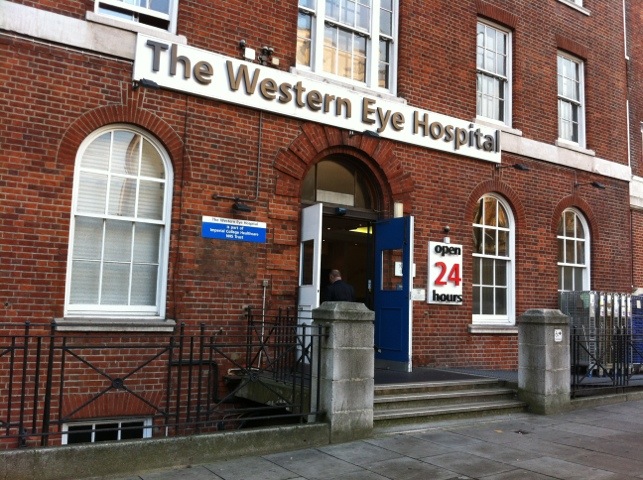
I left home at 7.00am this morning to get the train to London Paddington as today is my yearly eye hospital check up at the Western Eye Hospital nr Paddington. The train is absolutely crammed and I have someone sat next to me that really does need a bath (sorry had to be said). The train journey is fairly quick so I should arrive by 8.30am as the train goes direct.

20111117-085436.jpg

My so called appointment is 9.10am but I could almost guarantee they will be running late.

Firstly I see a nurse who asks about my general health then checks my vision as would an optician. Next I have drops in the eye to dilate the pupil for the photographer to take a picture of the back of my eyes. Finally I see the Consultant who has a look at the pictures and my eyes to determine if they are ok or not – panic !!

Hopefully everything is ok as I have already had two Vitrectomy operations and 10,000 laser burns in each eye to treat Pre Proliferative Retinopathy . So I have basically had all the treatment possible but my eyes have been stable now for probably 5+ years apart from the operation side affects.

I will of course let you know how I get on and would really appreciate your experiences regarding eye problems.

Bye for now.

Read Full Post »


Hi all,

So the end of British Summer time has finally hit us all with vengeance and at 5.00pm tonight it was almost dark which is awful.

As you may already know I have had numerous trips to eye clinics due to suffering with Diabetes Retinopathy for the past 7 years which is really awful and was a real scary shock when I was first told, it was Vision Express that actually discovered the problem and instantly booked me into my Diabetes eye clinic. The problem really started after I had small blood vessels at the back of my eyes burst which affected my vision and made it very cloudy in both eyes. The treatment started with laser to burn around the blood vessels which prevents any new weak blood vessels from forming which then burst. Laser itself is very uncomfortable indeed and I have had approx 10,000 burns in each eye which I am told is the limit but this does seem to have stopped the bleeding which is great news and I am so thankful to the Eye Specialists. After all the laser it still left my vision cloudy so meant I had to have what’s called a Vitrectomy in each eye which basically entails having the clear jelly in your eye removed (Your eye replaces this fluid), I can honestly say this operation is not nice at all and means you have dissolvable stitches in your eyeball (Gross I know). Having said all that If this had not been done I would certainly not be typing this Blog even though one eye has very poor vision and both eyes have awful night vision.

So to the present day – my eyes seem to be stable at the moment and my latest eyesight test did not show any problems, even my prescription had not changed apart from my short sight vision which has got slightly worse. My next Diabetes eye check up is at the Western Eye Hospital in a few weeks time so fingers crossed I get the all clear but I am a little worried.

One of the worst things I am left with is very poor small detail reading in both eyes meaning typing Blogs like this I have to have the page zoomed in to make the words larger, damage to my central vision in my right eye meaning details in my right eye is near on impossible to read, also my night vision is really bad and means I am unable to drive in poor light so this time of year is even worse as it is dark late afternoon. It means I have to carry a very bright torch with me that literally lights the whole path/road that cost me a fortune and even then it is really hard to see if I am on my own walking home from work, without a super bright torch I would literally be stuck and please let me know of any pocket torch companies who make super bright torches. We just take our vision for granted and I am also guilty of this in the past.

Thanks for reading and please feel free to comment.

Andrew Borrett

Read Full Post »


I live in Berkshire, UK with my wife, 19 month old son Jake and 4 week old baby daughter Amy – I also have my own Diabetes web site called http://www.mypump.co.uk .

I have had Type 1 Diabetes all my life which is 40 years and technology/treatment has changed so much for the better since I was a baby. It would have been around 1972 when I was first diagnosed with Diabetes as my parents noticed I would be drinking a lot and lethargic. I still remember when I was a very small child that my Mum used to inject me with my insulin using a stainless steel and glass syringe which was very big and did used to be quite painful to say the least but I only had one injection per day. Diabetes back then was far more difficult to control and your Blood Glucose or sugar levels where monitored using a urine stick rather than the high tech blood glucose meters we use today from Bayer Diabetes Care, Roche – Accu Chek, Lifescan etc which are far more accurate. When I was very young I did spend quite a lot of time in hospital from very bad Hypo’s where I actually would go into a Diabetic Coma and find myself waking up in Hospital which was awful. As time went on my control got better and of course technology also got better with small syringes and better insulin plus not forgetting the blood glucose meters we use today. Diabetes treatment changed fairly rapidly with me going from one injection per day to two which at the time was a huge step for me and then going onto an insulin pen with four to five injections per day (what a pain literally).
I never thought I would have any complications from Diabetes but unfortunately in 2003 after a visit to Vision Express opticians they said I had signs of Retinopathy eye complications and sent me to a specialist straight away. It was confirmed that I had Diabetes Retinopathy and would need laser treatment in both eyes to save my sight. I ended up having 10,000 burns of laser in each eye to try and stop tiny blood vessels bursting in my eye. The laser was very uncomfortable but did help but because the Retinopathy was so bad I then ended up having a Vitrectomy operation in each eye, this operation is not nice at all and involves a tube being placed in your eye and the clear liquid being taken out – your eye naturally replaces this cloudy fluid with its own clear liquid. My site now is stable but the operations have still taken there toll as my night vision is very bad (i.e. I can not see to drive a car) and my left eye central vision is damaged. I do think things could be far worse and I just hope they stay stable. I got to the point where I seemed to be injecting myself 4-6 times per day which is surely enough for anyone and this is why I spoke to my Diabetes team about the Insulin Pump. So after being on injections for almost 36 years I was lucky enough to have funding from my local PCT for an Insulin Pump which is amazing and has really changed my life for the better as it is so easy to use. I use a Medtronic Paradigm 722 and an Animas 2020 pump (No not at the same time lol) with each pump having plus/minus points but far better than constantly having injections for food or correction dose’s. An Insulin Pump basically delivers a small dose of insulin 24/7 as a background dose called a Basal Rate and each time you have a meal or snack you give yourself a boost of insulin to counteract the food called a Bolus dose. The pump did take some getting used to at first but once the tiny canular is inserted into the same are as you would inject you hardly know it is there. The pump itself is a similar size to a mobile phone and can be worn in normal places 24/7 and even while you are in bed (you do get used to it). One major thing you need to do when on an Insulin Pump is Carbohydrate Count to ensure the Bolus dose you give is enough to cover the food you have just eaten (See Diabetic Friend) but yet again this gets easy with time. My last Hba1c taken in June 2010 was 7.5 which I think is pretty damn good.

I hope you enjoy my Blog and please do not hesitate to contact me if you have any questions at all http://www.mypmump.co.uk or why not follow me on Twitter @MyPump1).

Thanks for reading.

Andrew Borrett My Pump

Read Full Post »

« Newer Posts