Feeds:
Posts
Comments

Posts Tagged ‘insulin’


Elgringo’s Retina Screen from Mike at Diabetes In Spain

By on January 22, 2013  in Ramblings
Thanks to Mike for this Blog – I wanted to share as I am due for my Annual Eye Check Up and Retina Screening in a few weeks.

730760 10151349075483518 944538258 n Elgringos Retina Screen

Yep, that’s mine!

Hey Guys!

Just checking to see how everyone is doing!  Hope you are all doing fantastically well!

Moving on, I had my Annual Retina Screening at my local clinic.  I’m sure we know how important having our eyes etc.. checked on a regular basis whilst trying to avert the dreaded Diabetes Retinopathy.  So this quick, painless and non intrusive method is a brilliant way to make sure our eyes stay in great shape.

I took a pic of mine (scared the nurse to death when I asked to snap a pic) although I won’t have the results for up to 2 weeks.  I am hopeful that all is ok this time!

 Elgringos Retina Screen

Diabetic Eye Screening

For those who wonder what it all looks like, here is a image courtesy of the UK NHS Diabetic Eye Screening service.  I would have taken self portrait but a) the room was dark b) I had a hand over one eye and c) I was being blinded by the flash going off millimeters away from the centre of my eye! icon smile Elgringos Retina Screen

Stay healthy!

Mike – Diabetes In Spain

PS: The picture was taken cause I’m a nosey bugger and it also forms part of my photo project over at www.elgringo365.com

Read Full Post »


    UK has world’s fifth-highest rate of children with type 1 diabetes
20130121-203450.jpg

Some 24.5 children in every 100,000 in Britain develop the condition, putting the UK behind Finland, Sweden, Saudi Arabia and Norway

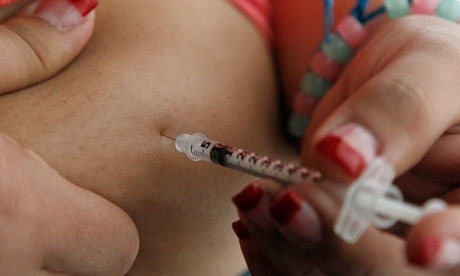
People with type 1 diabetes cannot produce insulin, so have to get daily doses of it via injections or an insulin pump. Photograph: Reed Saxon/AP
Denis Campbell – The Guardian

The UK has the fifth highest rate in the world of children with type 1 diabetes, which can lead to serious health problems such as blindness and strokes, new research shows.

Some 24.5 children in every 100,000 aged 14 and under develop the condition, according to figures produced by the International Diabetes Federation.

Finland tops an international league table of 88 countries, compiled by Diabetes UK from the data, with a rate of 57.6 per 100,000 children in 2011. Sweden is next with a rate of 43.1, then Saudi Arabia (31.4) and Norway (27.9), and then the UK (24.5).

The UK’s rate is about twice as high as that in Spain (13) and France (12.2), 50% higher than Ireland’s (16.3) and a third more than the Netherlands (18.6), Germany and New Zealand (both 18). The league table only covers the 88 countries where the rate of incidence of type 1 diabetes is available. Many others do not record the incidence of the condition.

Experts are puzzled by the findings and do not know why the rate is high in some places. “We do not fully understand why rates of type 1 diabetes vary so greatly and so it is a mystery why the rate is so high in the UK,” said Barbara Young, chief executive of Diabetes UK. “One of the main theories is that lack of Vitamin D may increase risk, while people with a family history are more likely to develop it and so genetics also seems to play a role.” But it was impossible to identify the exact causes of the condition until more research was done, Young added.

Type 1 diabetes is an auto-immune condition which, unlike the much more common type 2, is not related to diet or other lifestyle factors. About 90% of the 3.7 million people in the UK diagnosed with diabetes have type 2, which is closely associated with obesity, while the other 10% have type 1, according to Diabetes UK.

Type 1 tends to affect children and young adults, though some cases only become apparent in adults. Sufferers cannot produce insulin, so have to get daily doses of it via injections or an insulin pump, and must also control their condition through diet and exercise. Unless it is well managed it can lead to serious complications such as eyesight problems, kidney disease, heart attacks and strokes by as early as the age of 25.

“As incidence is growing by 4% year-on-year, with the greatest rise in under-fives, this problem is only going to get bigger,” said Sarah Johnson, director of policy and communications at the Juvenile Diabetes Research Foundation. It estimates that about 400,000 people in the UK, including 29,000 children, have the condition. Incidence is expected to double by 2020, the charity says.

“The government’s investment in medical research to understand the causes of, and to help cure, type 1 diabetes is woefully inadequate to face the challenge of type 1 diabetes, and its impact on our children, now and in the future,” she added.

Dr Justin Warner, a spokesman for the Royal College of Paediatrics and Child Health, said the growing number of children with type 1 was “worrying”. He said it was also disappointing that about 25% of children with newly diagnosed type 1 diabetes have developed diabetic ketoacidosis (DKA) – a complication which can be fatal if not treated – by the time they are identified, which has raised concern about late diagnosis. “This cannot be allowed to continue and the time has come for a concerted effort to improve quality of care,” Warner added, because of an “alarming” rise in children with DKA being admitted to hospital and “little improvement in outcomes of care and participation in care processes over the last eight years in England and Wales”.

An NHS-funded audit of the care of children with diabetes in 2010-11 found that just 6% of those with type 1 receive the eight health checks the National Institute for Health and Clinical Excellence recommends that all have every year.

Anna Soubry, the public health minister, said new financial incentives in the NHS designed to encourage better care of children with diabetes, and the creation of 10 regional networks of experts in the disease, should help improve the situation.

Read Full Post »


Hi all,

I just wanted to take this opportunity to say thank you to everyone who has contributed, shared information or commented on my web sites www.mypump.co.uk and www.mypumpblog.com.

As always please let me know if you have any interesting blogs that you have discovered or even ones of your own which I can share with our ever growing Diabetes community, we are all certainly in a very exciting time and I still can’t believe how fast Diabetes technology is changing for the better. It is so important that we share as much information as possible as there are so many people out there with Diabetes who may not realise what is actually available to them to help make their lives a little easier.

20121231-173519.jpg

I hope you have all had a very enjoyable Christmas and I would like to wish you all a very Happy New Year and best wishes for 2013.

Kindest regards

Andrew Borrett

www.mypump.co.uk
www.mypumpblog.com
T @MyPump1

Read Full Post »


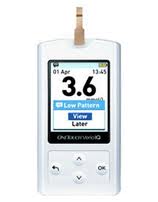
LifeScan’s OneTouch Verio IQ : Review by Dlife wwww.dlife.com, thanks very much for sharing this info.

Don’t forget to check out the Dlife web site which is superb.

Adam’s Favorites:

·         Low and high blood glucose pattern recognition

 ·         Bright color screen, simple menus, and interface
 ·         New, accurate strips with a clearer sample window and better blood drawing action
Onetouchverio

LifeScan’s excellent OneTouch Verio IQ was approved in the US last fall. Its major highlight is its ability to recognize patterns of high and low blood glucose. After setting high and low limits (e.g., 80 mg/dl and 140 mg/dl or 4.4 to 7.8 mmol/l in my case), the meter will automatically search for high and low glucose patterns for every test. A “low pattern” means that in the last five days, the meter has measured at least two “low” test results at a similar time of day (within three hours). A “high pattern” is slightly different: the meter looks for three values over the high limit – although only results tagged “Before Meal” are included because the meter doesn’t want to include high numbers caused specifically from food (blood sugars usually rise right after eating).

  • When the meter discovers a pattern following a test result, it immediately flashes a message. For instance, I received one that said: “Low Pattern – March 16, 12:30 pm. Looks like your glucose has been running LOW around this time.” After I selected “Get details,” the meter displayed the past glucose results associated with the low pattern.
  •  I found this pattern-recognition feature extremely useful for a number of reasons. First, it gave me the alert message right after my test, providing instant, real-time feedback right after a low or high occurred. Second, the meter searched automatically, requiring no manual calculations or logbook checking on my part. Finally, the feedback guided me on what actions to take – instead of something like an average blood sugar, I was able to see the times of the day when my glucose was out of range. The meter also has a “Pattern Log” that can be accessed from the home screen, allowing previous pattern messages to be viewed at any time. One downside to the pattern tool was that the “High Pattern” only uses results tagged as “Before Meal.” Although tagging only requires one button push following a test result, if you are in a rush and consistently forget to do this, you will not get “High Pattern alerts. “Low Pattern” results do not require any tagging.
  • Besides the pattern analysis, the Verio IQ also has a color screen that is easy to read in any light. I was also struck by the intuitive and easy-to-navigate user interface. Besides the previously described “Pattern Log,” the meter only has two other menus: “My History” and “Settings.” Navigating around the user interface requires just four buttons, making it difficult to get confused or lost in the Verio IQ menus.
 Many thanks to Dlife for the great product reviews.

Merry Christmas and a Happy New Year.

Read Full Post »


Thanks to Sue at Desang Kit Bags for this update.

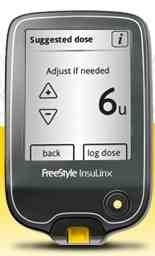
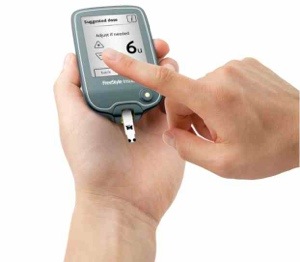
This is a brief email to alert you to the new accessibility to the FreeStyle InsuLinx meter from Abbott. When originally launched, you could only get one directly from your diabetes nurse as it needs to be programmed around your own personal treatment programme. An access code was required to put this information in which HCPs had access to. However, now the meters are available direct from Abbott.

20121216-154910.jpg

The FreeStyle InsuLinx meter comes in a ‘pre-easy’ mode so you can use all the main tools. The code is only needed if and when you want to turn on the bolus Calculator tool, and the code can be given by your HCP at their discretion.

You can add your own image into the phone as well as add various other personalized settings. It’s PC and Mac-compatible and comes with FreeStyle Auto-Assist software. The meter’s touch screen is icon-driven, so you press the relevant icon to get into that part of the set-up. There’s only one button, which acts as the home button, just like a mobile phone.

20121216-155017.jpg

To find out more, click on a pic, or go to
www.freestyle-insulinx.co.uk

Best wishes,

Sue

Sue Marshall,

Read Full Post »


I have recently been away on holiday with my family in the UK to the coast which was great and my 3 year old son & 18 month old daughter had a great time 🙂

image

One thing I have noticed is what a huge difference that stress makes to your blood sugar levels, I am not saying my children were naughty but certainly kept us busy :-).

I found my blood sugar levels were all over the place and first thought it was either the change of day to day activities or different food but I am certain it was stress. Since returning home and going back to work my levels have stabilised, not that I was happy to be back at work as it was great spending time with my little monkeys ha ha.

Has anyone heard from any Diabetes companies that have any new exciting products due for release soon? I am still waiting for a release date for the Cellnovo pump which seems to be taking forever.

Thanks for visiting and I look forward to reading your comments soon.

Andrew

Read Full Post »


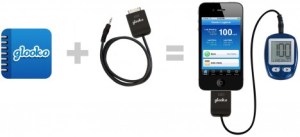
Glooko’s mission.
Glooko’s mission is to help people with diabetes live life while effortlessly managing their diabetes. It is quickly becoming a global epidemic with far-reaching social, health and economic implications. Furthermore, the unfortunate reality is that diabetes permeates every aspect of an individual’s life and affects them psychologically, physically, and financially. Living with the disease is incredibly burdensome and takes a tremendous amount of motivation, commitment and effort to manage successfully.
It has been proven that people can gain better control of their diabetes and become better self-managers when they understand and visualize the effects of their actions. When they use tools that are integrated into their daily lives, they can be encouraged to have more productive conversations with their care circle and modify their lifestyles. We believe that the most effective tools are simple to use and mobile – available anytime, anywhere.
Glooko’s Solution
Glooko’s breakthrough solution consists of the Glooko MeterSync Cable and the Glooko Logbook app. To use, simply plug the Glooko MeterSync Cable into most standard self-monitoring blood glucose meters and sync to a variety of iOS devices to create a digital logbook of readings. It’s easy to review daily blood sugar levels, annotate them and share the results with a physician.

Save time and eliminate errors. Quickly download blood glucose readings from one or more meters directly into one logbook. Get rid of the difficult pen-and-paper approach and avoid the urdens of manual entry with other apps. It’s easy to learn – you can get started in just seconds!

Add notes and context. Enter pre- and post-meal tags and notes about carb intake, activity or insulin doses as they happen, so you can see how the things you do affect your blood sugar levels. You also get access to a comprehensive food database with nutritional facts to help you count carbs and add additional information to your notes.

Track trends and share data. Review patterns in your blood sugar readings related to the time of day or in chronological order. Automatically create a logbook of your readings or a spreadsheet for you to generate charts and email or fax summaries to your healthcare team with just a touch.
Pricing and Compatibility
The Glooko Logbook app is free and available on the iTunes App Store.
The Glooko MeterSync Cable and Glooko IR Adapter can be purchased in Europe for £32.50 and £12.25, respectively.
The Glooko IR Adapter can be purchased in the U.S. through Amazon for $14.95 and in Canada through Well.ca for $18.99 (including shipping and handling), and in UK/Europe for £12.25. (If you have an ACCU-CHEK® meter, you will need to purchase both the Glooko MeterSync Cable and the Glooko IR Adapter.)
Compatible meters: ACCU-CHEK® Aviva, ACCU-CHEK® Aviva Nano, ACCU-CHEK® Compact Plus, ACCU-CHEK® Nano, Bayer’s Breeze®2, Bayer’s Contour®, FreeStyle Freedom Lite®, FreeStyle Lite®, OneTouch® Ultra®2, OneTouch® UltraLink®, and OneTouch® UltraMini®
Compatible iOS devices: iPhone 4S, iPhone 4, iPhone 3GS, iPod touch (3rd & 4th generation).

What Customers are Saying

Glooko Logbook debuted in November 2011, and has since been hailed by users and bloggers for its ease-of-use and ability to provide context to daily data collected by people with diabetes.

To read first-hand what customers are saying you can take a look at Amazon, Apple iTunes, Facebook and Twitter. Below is a sampling:

Amazon reviews – majority 5-star ratings

5.0 out of 5 stars: Super easy way to document and share critical information the glooko metersync cable is incredible! i have been trying to upload blood sugar data for years with no success (always some technical difficulty). within 5 minutes of receiving the Glooko cable I had over 500 blood sugar readings stored on my ipod and a printable/emailable log on my computer for myself and my health care providers. I cannot wait to share this with them so that they can share it with other diabetics. A must have for iPhone/iPod users with diabetes!!!

Apple iTunes – rated 4+
5 out of 5 stars: Glooko Cable and app are worth the price I received my cable in December and started seeing my blood levels in a different way. No writing, no paper logs. Sync your meter once a week or every time you test. The app works well with airprint or email the log as an attachment to yourself or caregivers.

Future Plans

Glooko plans to support more blood glucose meters and smartphones as well as create future products that allow charting and graphing as we pursue FDA clearance.

Read Full Post »


Hi,

Firstly yes it is the weekend and it has been a long week so I am very happy it is Friday night.

I have been using my Animas 202 & recently the Vibe for just over 4 years which I have been very happy with and had no issues whatsoever. I also enjoyed my trial with the Animas CGM and with the Medtronic Enlite sensor that have both performed very well but the main issue with CGM is the lack of PCT funding in the UK but I am sure this will change one day.
20120914-231616.jpg
I have just had my annual Diabetes Check Up at my local hospital and of course had my HBA1C checked which ended up being 7.2 (sorry still getting used to the new measurements) so I was very pleased indeed as this has certainly reduced since I have been using an Insulin Pump.

Whilst I was having my check up I asked my consultant about patch pumps namely the Omnipod which I know very little about to be honest. My consultant actually had an Omnipod with him which I had a good look at and was pleasantly surprised as I didn’t realise the hand held device had a built in BG meter. The actual Omnipod did look fairly large though and I was a little concerned as to whether it would stay on your skin if bashed or brushed as it does look bulky, however I believe there is a new smaller pod and hand held in the pipeline but I have no idea of when these will be released.
20120914-231830.jpg
Has or does anyone use the Omnipod and what do you think of it compared to a standard tubed insulin pump – also are there accessories for the hand held device as it looks fairly large to fit in your pocket ? I would imagine that the hand held part would need to go in a case that could clip on your belt or go in a hand bag ? How many lancets or test strips does the hand held hold – sorry I don’t know the technical term for the hand held part of the kit ?

I would really appreciate some comments on the Omnipod as I would love to give it a try for a couple of months so I could compare to a tubed pump ?

Many thanks and have a good weekend.

Andrew

W http://www.mypump.co.uk
B http://www.mypumpblog.com
T @MyPump1

Read Full Post »


The Power of Light

For decades, researchers, scientists and people living with diabetes have searched for a non-invasive way to continuously measure glucose.

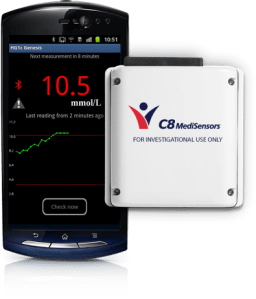
Enter the power of light: C8 MediSensors’ optical glucose monitoring technology is a breakthrough in glucose monitoring science. Completely non-invasive, this new technology promises a new glucose monitoring experience.

As you are probably already aware CGM or continuous Glucose Monitors have been available to us for quite a while now and range from individual devices to combined insulin pumps with built in CGM.

I was very lucky to have received an invite from C8 MediSensors to view their new Non Invasive CGM along with some fellow bloggers from Input, Insulin Independent, Every Day Ups and Downs – A Diabetes Blog all of course are certainly worth reading.

So the day started in London at a Consultancy Company who were great and had everything prepared for us bloggers (Nice sandwiches mmmm) as we can be hard work sometimes ha ha, we were all very excited to see this new CGM device and find out just how it works – not forgetting how much it costs. All the guys were very open and the day in my mind was for us bloggers to provide feedback on what we thought of the CGM which will also be operated using a smartphone app with various functions/log books etc so we all put our pennies worth into this as well.

I have been lucky enough to trial the Medtronic Enlite CGM Sensor and the Animas Vibe CGM Sensor of which both work in conjunction with the Insulin Pump which is great but still not perfect but they are certainly getting there. Both these devices use a wireless CGM sensor that in invasive ie literally goes into your skin that I found a little uncomfortable sometimes but you did get used to it very fast, I also struggled sometimes to find space on my body to insert the sensor as I was also wearing a canular for the insulin pump. All this said the technology on these devices is incredible and gives you a good trend on your blood sugar levels however you will still need to take regular finger prick tests to calibrate the CGM and this is the same for all CGM’s at the moment.

The product itself is a non-invasive optical CGM and is currently classed as a ‘investigational device’, so not yet available for sale anywhere but hopefully this will change very soon – even this year but you all know what red tape is like. C8 MediSensors will hopefully receive European CE mark approval towards the end of this year and plan to launch in the UK and Europe first so that is good news for us.

The Power of Light: Using Raman Spectroscopy to Measure Glucose

Our technique involves shining a monochromatic light source into the skin and detecting the scattered light.  The colors generated by Raman scattering are very specific to the exact chemical structure of the molecules in the sample.  The molecules’ various shapes, sizes, atoms, and types of chemical bonds will generate unique Raman spectra, a unique Raman “fingerprint” that can be used to non-invasively read and measure glucose.

I managed to find this info video on YouTube which I found very helpful but of course the best info would be found on the C8 MediSensors own website

C8 MediSensor info which I hope you will find useful.

  • CGM uses an optical light which was taken from Raman spectrometer which in its orignal state would be the size of an oven but the team have managed to minimise this to the size of a matchbox which is truly amazing.
  • The device needs to go against the skin which needs to be clear of hair or anything that would obstruct the optical light, the device would update you on your smartphone if the light is broken.
  • There is no separate control for this CGM as it is all done through your smartphone using te C8 MediSensors App which is still being fine tuned to meet our needs, you should be able to view you BG level, log books and lots of other useful info which is still to be confirmed.
  • At the moment the CGM is designed for use only by adults but I am sure this will change in the future as we never know what is around the corner.
  • The C8 MediSensor is about the size of a match box and similar in weight to a small mobile phone, there is also a separate battery pack to power the CGM of which both items are worn in a very non sexy looking material band – please remember this is brand new so like everything I am sure the C8 team will be working on revamped accessories etc.
  • A huge plus point for me is the fact you can put it on and off whenever you want as it is non invasive – even if it is worn a=in a rather large band.
  • As this device uses optical light it can be affected when you are in very bright areas or even sunshine but the guys have a special material light shield which fits over the CGM to eliminate any sunshine issues – but to be honest you possibly would not want to be wearing this device on the beach, well not yet anyway.
  • The CGM can store a rolling 4 months worth of data which should be more than enough info for most of us.
  • Initial calibration is between 45-60 minutes and when placing the CGM Sensor onto your skin it can take 15 minutes to warm u.
  • COST – well a typical CGM Sensor alone could cost thousands of pounds per year but we were given an indication that the C8 MediSensor will retail at US$4,000 (approx £2,500 at today’s exchange rate). The shelf life would be up to 4 years so this one-off payment should in theory be it – this compared to invasive CGM would be far cheaper in comparison.

I hope the above has answered some of your questions and I must apologise if I have missed anything – please leave me a comment if you have any further questions ?

The Science Inside

Optical glucose monitoring leverages decades of technical innovation in optics, wireless, digital cameras, miniaturization and lessons learned from dozens of attempts at measuring glucose non-invasively. Utilizing a patent-protected process, our design will transmit a painless pulse of light into the skin to detect glucose levels. Paired with Bluetooth technology, the glucose reading will be transmitted wirelessly to an easy-to-use display application on an ordinary Android smartphone.

It was a real pleasure to meet the guys from C8 and Andrew from STWEM who arranged the event, it was quite refreshing to be speaking to a team that was open to the majority of our probing questions and they were free with the info, I hope that we as bloggers have given the team some valuable information to help enhance the device and I hope this will be a continued relationship with C8 – thanks again guys.

A New Experience Awaits

After eight years of research and development, we hope to make optical continuous glucose monitoring a reality for people with diabetes. Currently an investigational device and not available for sale, we plan to pursue regulatory approval and make this new technology available in Europe in 2012.

To stay apprised of product availability, sign up for our regular updates.

Reserve Now

Read Full Post »


Hi,

As you are possibly aware I have had Type 1 Diabetes all my life which is in fact 40 years – hard to believe I know 🙂

Since I was first diagnosed as a baby the technology has changed so much for products to assist people manage their Diabetes easier, I still remember having large stainless steal with glass syringes that needed to be sterilised each time you used it (Thanks to my Mum) and even checking your Glucose Levels involved urine in a tube which you added a fizzy tablet that changed the colour of the urine – oh my god.

Back to 2012 and some absolutely amazing new products to me which over the next few weeks I hope to have some more in depth Blogs about but some items that have caught my eye have been :

1 Mendor Discreet – All in one BG Meter which is amazing.

2. C8Medisensors – a new non invasive CGM due for release this year all being well, I was lucky to attend a product demo in London a few days ago – WOW. More details to follow.

3. Glooko – this is a cable the attaches to your iPhone in conjunction with an App that allows you to sync your BG results to your phone with lots of other useful add ons. I love it and Blog coming soon.

4. Cellnovo – Insulin Pump, come on guys we have been waiting such a long time for this to be released and I must say this again is technology at its best, I am looking forward to a trial of this patch pump/handset soon.

5. Sanofi – iBGStar BG meter that is tiny and actually can be used on its own or is really created to clip to the bottom of your iPhone to work again in conjunction with an App – Amazing.

Please forgive me if I have missed anything out but these are a few items I have been looking at recently, not forgetting all the Diabetes companies which have literally changed my life such as Medtronic, Animas, Lifescan, Roche, Bayer, Everymed and Sanofi (iBGStar) to mention a few – THANKS TO YOU ALL.

Thanks very much for reading and don’t forget to follow me on Twitter @MyPump1 or info on http://www.mypump.co.uk & http://www.mypumpblog.com.

Have a good weekend
Andrew

Read Full Post »

« Newer Posts - Older Posts »