Feeds:
Posts
Comments

Archive for the ‘Diabetes’ Category


Free Upgrade to GlucoMen LX Plus for supporters of “My Pump”

If you have diabetes, or someone in your family has diabetes, we would be delighted to upgrade your meter to the latest model, free of charge, as part of our ongoing commitment to customer support.

GlucoMen LX PLUS is designed with all of the best features built into the blood glucose meter, strip and finger-pricker. In addition, you have the option to test for blood ketones if it becomes necessary; a vital early warning system to help prevent the potentially life threatening complication of diabetic ketoacidosis (DKA).

As reviewed by “My Pump” GlucoMen LX PLUS offers ease and convenience whether you wish to test blood glucose only or you also need the facility to test blood ketones when appropriate.

No coding, the standard for an accurate test every time

– Smallest blood sample, fastest test time

– Pain free finger pricking due to Comfort Zone Technology

– A stylish new meter with coloured covers.

– Both tests together in one meter, with the accuracy and convenience of no coding

– Glucose strips in a convenient pot rather than the foil wrapping of other glucose / ketone meters

And to help you and your family understand diabetes, including DKA, we have developed ‘Testing Essentials’, online video tutorials. Just go to www.glucomen.co.uk, and look under ‘About Diabetes’.

To request your free upgrade to GlucoMen LX PLUS please visit www.glucomen.co.uk and go to ‘Product Support’, then ‘Request a Meter’, entering reference number AD5, or alternatively call our Customer Support Helpline – 0800 0852204 (01189 444128).

Read Full Post »


SUNDAY, 26 FEBRUARY 2012
The Advanced Technologies and Treatments for Diabetes conference 2012 – a great blog from Anna at Insulin Independent

The 7th -10th February 2012 saw the arrival of the international event known as the Advanced Technologies and Treatments for Diabetes (ATTD) conference, which I was lucky enough to be able to attend as a representative of INPUT and funding from Dexcom to assist INPUT in the work they do. The ATTD is a worldwide conference where research outcomes at the very forefront of technological advance are presented. Being only 5 years old it is still in its fledgling years, but growing noticeably each year. Although I was not at last year’s event, I am informed that there were around 1000 attendees. This year, there were 1600 and I’m sure there are many more who would have attended given half a chance. It is aimed at diabetic professionals (or professional diabetics, in my case) mainly being consultants, nurses and diabetes educators, although the odd advocacy service pop up here and there too!
Being an insulin pump user, a diabetes advocate and a bit of an inquisitive old lass, it is always of great interest to me to see where this diabetes technology beast is heading. We hear terms like ‘Artificial Pancreas’ and ‘non-invasive glucose monitoring’ thrown about on an almost daily basis now and yet many people in the diabetic community feel these are creatures of myth and seem to hold a ‘that’ll be the day’ attitude towards them. So to be involved in a conference where this research is being presented was an honour and frankly, somewhat of an eye-opening occasion for me. .
Clearly it would be impossible to go through each of the presentations, symposiums and workshops in detail. Not in the least because my less than scientific mind would never be able to recall all the details for you. But perhaps giving you an idea of the things that caught my eye would be of use.

One of the stands in the exhibition which I kept circling in a slightly cautious way, was that of C8 Medisensors. In case you haven’t heard of them (I hadn’t), they are bringing to market a non-invasive glucose monitor that uses Raman Spectroscopytechnology which for those of you who don’t speak ‘medical journal’, is effectively a light that shines through the skin and identifies how many glucose particles there are in the interstitial fluid. Phew, mouthful ay. Well, according to early tests they are showing promising results, although the last test only involved 6 people. I would need to see a significant higher amount before I would be convinced it would rival the likes of Dexcom 7+ and Medtronic Enlite. Now we all remember the success of previous non-invasive systems such as the Glucowatch, the remnants of which remains burned on the skin cells of countless diabetics who had the misfortune of using it. But this was impressive. In its current form it is a bit on the ‘chunky’ side, and is held around the midriff with a tight neoprene band. But for those parents out there who hate the feeling of piercing their children’s skin with countless needles they have to face, I think this could be a contender. If, and only IF, they come good in clinical trials. Watch this space.

For quite some time I have been aware that in order to avoid post meal spikes I need to bolus 30 minutes before each meal, otherwise those spikes just creep in a couple of hours later. But we also know that each diabetic is different and we are told all the time to find our own way. So I was very interested in a lecture about bolus times in children using insulin pump therapy. In the results being demonstrated to the audience, the message was that 15 minutes was the optimum pre-meal bolus time to avoid those spikes. In addition to this the study, called “Fine Tuning of Insulin Pump Therapy in children with type 1 diabetes: The importance of bolus timing and type” demonstrated that making the most of dual wave boluses and separating correction boluses and meal boluses, would make all the difference. They found that with mediterranean food for example, boluses were split 70% straight away and 30% over 4 hours, while Pizza was 30% straight away and 70% over 6 hours. They also highlighted that the results of their study showed that when blousing for a meal, any correction bolus being included with the meal bolus, should be separated by 15 minutes, and that this would bring glucose down to normal via the fastest route. Fascinating stuff for me, someone who has always struggled to get my head about a dual waver

One of the key lectures for us to attend included INPUT’s very own Lesley Jordan taking to the stage. Lesley has been involved in a pioneering project to trial the Accu Chek Diaport, an intra-peritoneal (goes into the peritoneal cavity in the abdomen) infusion site which is permanently fixed (as long as the host wants it, that is). It is surgically implanted and regularly maintained and allows for insulin to be much faster acting (see number 3 on my list), removes the worry of hitting a bad site and means much better control. It may not be for everyone as it is surgically implanted but for those with site problems leading to frustration and poor control it provides a very useful tool in helping achieve control over their condition and maintain use of an insulin pump effectively. Lesley has been one of the Diaport ‘guinea pigs’ and thanks to feedback from her, the new and improved second generation is ready to launch.

There were also stands demonstrating the Omnipod, the Accu-Chek Combo, the Medtronic Veo and my particular favourite of the moment, the Cell-Novo. I had the chance to catch up with some old friends from Medtronic, meet new ones at Roche and Cell-Novo and had a chance to thank Dexcom for supporting INPUT and in a round about way, helped me attend such an inspiring event.

Read Full Post »


Sanofi to conduct a survey of parents who have teenagers and young adults with type 1 diabetes

20120118-204118.jpg

Do you have a son or daughter aged between 13 and 23 who has type 1 diabetes? Are you ever concerned about their health and diabetes management now that they are becoming more independent?

Sanofi is conducting a survey of parents of teenagers and young adults (aged between 13 and 23) who have type 1 diabetes to highlight any worries they may have for their children’s health and diabetes management. The survey will be used to support the launch of a new, blood glucose monitor (BGM).

Please find a link to the survey here: https://www.surveymonkey.com/s/flyingthenestfeature

If you have any questions, please get in contact with Claire Nicholson (tel: 020 7025 6524; email: claire.nicholson@redconsultancy.com)

Read Full Post »


A message from John Davis
Posted on January 6, 2012 by inputadmin www.input.me.org

John Davis

20120110-213301.jpg

I have been overwhelmed by the response to the announcement that I am to receive an MBE for services to diabetes in the New Year’s Honours list. I had no idea of the depth of feeling there is regarding my work with INPUT. It has been a humbling experience and I thank you all for your messages of congratulations.
Obviously it is a great honour and privilege to be recognised in such a way, and I am very proud to receive it. I believe that it is acknowledgment that, at last, insulin pump therapy has received the recognition that it deserves.

However, it could not have been achieved without the help and support of all of you out there in the “pump community.” There have been many who have contributed over the years and it is not possible to mention them all, but I must pay special tribute to Jackie Jacombs of the UK CWD Advocacy Group, who has been invaluable help for so long, and to Lesley Jordan, who has now taken over the reins of INPUT upon my retirement.

I would also like to give special thanks to;
Joan Everett, DSN at Royal Bournemouth Hospital. It was with Joan’s help that I started INPUT in 1998, back then there were only 180 pump users in the UK. Now there must be around 20,000.
Dr Fiona Campbell, who invited me to Leeds to make a presentation on insulin pumps to her Yorkshire colleagues. I took 3 children and their parents with me. I let the children tell their own story of life with a pump. It was after this presentation that Fiona decided to start using pumps in her clinic.

Finally, Prof John Pickup, a great man, who has not had the recognition he deserves for all his work in developing the pump. He gave me invaluable help in the early years.
It can be frustrating to be ahead of the curve. It took me several years of lobbying to get influential organisations and personalities in diabetes care in the UK to take pump therapy seriously. It is satisfying that we are now all going in the same direction.

Thank you

John Davis MBE

Read Full Post »


Claims of 24,000 ‘excess’ deaths from diabetes

(Read online)

Shock statistics for diabetes deaths have been widely reported

20120105-221753.jpg

As many as 24,000 people with diabetes are dying unnecessarily each year, many of the papers have reported today. This shock statistic was a conclusion from the National Diabetes Audit, the first ever report to look at deaths from the condition.

While this is a large number of deaths, it must be viewed in context – millions of people live with this potentially life-threatening long-term illness, yet it can be managed safely.

The National Diabetes Audit suggests that in England there are about 24,000 ‘excess deaths’ a year in people with diagnosed diabetes. This means that each year, around 24,000 more deaths occur among people with diabetes than would be expected to occur if their mortality risk was the same as that of the general population. A press release from the NHS Information Centre, which published the audit report, said these deaths could be avoided through better management of the condition.

What other risks did the National Diabetes Audit find?

The study found that the risk of death for a person with type 1 diabetes (where the insulin-producing cells of the body do not work at all) is 2.6 times higher than that of the general population. For people with type 2 diabetes (where the body does not produce enough insulin, or the body’s cells are not sensitive enough to insulin) it is 1.6 times higher.

In younger people, the difference in mortality rates is even bigger. For example, women between 15 and 34 years of age who have type 1 diabetes are nine times more likely to die than women in the general population, and women of this age with type 2 diabetes are six times more likely to die.

The report also found a strong link between deprivation and increased rates of early death. Among under-65s with diabetes, death rates among people from the most deprived backgrounds were double that of those from the least deprived. Death rates also vary according to where people live; London has the lowest mortality rates from both type 1 and 2 diabetes, while the highest mortality rates were in the north east of England.

The study’s lead clinician Dr Bob Young, consultant diabetologist and clinical lead for the National Diabetes Information Service, said, “For the first time we have a reliable measure of the huge impact of diabetes on early death. Many of these early deaths can be prevented. The rate of new diabetes is increasing every year. So, if there are no changes, the impact of diabetes on national mortality will increase. Doctors, nurses and the NHS working in partnership with people who have diabetes should be able to improve these grim statistics.”

What is the National Diabetes Audit?

The news is based on the National Diabetes Audit (NDA) Mortality Analysis 2007-2008. This report was prepared in partnership with various trusts, including The Healthcare Quality Improvement Partnership (HQIP), which promotes quality in healthcare, and the NHS Information Centre, the official source of health and social care data and information for England. The NDA covered four key components of the government’s National Service Framework (NSF) for Diabetes:

checking whether everyone with diabetes was diagnosed and recorded on a practice diabetes register
looking at whether those registered are receiving key elements of diabetes care (such as regular checks of blood glucose levels, or for protein in the urine)
looking at the proportion of people registered to have diabetes who achieve the treatment targets for glucose control, blood pressure and blood cholesterol, as defined by NICE
looking at the rates of acute and long-term complications of people with diabetes, including deaths from the condition, the focus of the current report
As part of this GP audit, all primary care trusts contributed data from 5,359 GP practices on 1.4 million people with diabetes. This figure represents 68% of the 2.1 million people estimated to have diabetes in England in 2007-2008 (the participation rate). The current analysis focuses on mortality from the condition, and has therefore also linked data from the NDA to formal death notifications through the NHS Information Centre Medical Research Information Service (MRIS) in order to include data for those people with diabetes not included in the GP audit.

What was the report’s main finding?

By following up the ‘cohort’ of 1.4 million people with diabetes over the next year, the researchers found 49,282 deaths. As the ‘participation rate’ (see above) was 68%, taking the estimated prevalence of diabetes in England, it was estimated that the total annual number of deaths of people with diabetes was between 70,000 and 75,000. This represents about 15-16% of the 460,000 deaths that occur annually in England.

Researchers estimated that in total there were about 16,000 more deaths among people with diabetes than would been expected if their mortality risk was the same as the general population. By linking these results to records of national death certificates (in order to include people with diabetes who did not participate in the audit) they estimated 24,000 excess deaths each year in people with diabetes.

The risk of death for patients with type 1 diabetes was estimated to be 2.6 times higher than that of the general population, and for people with type 2 diabetes the risk was estimated to be 1.6 times higher. Across the country there were variations in mortality, from 1,852 deaths out of 100,000 people with type 1 diabetes in London to a high of 2,351 out of 100,000 in the northeast. For type 2 diabetes the figures ranged from 1,246 out of 100,000 in London to 1,668 out of 100,000 in the northeast.

Why are so many people dying of diabetes?

The analysis itself did not look at the specific causes of death among people with diabetes. However, it is widely recognised that without proper management of this condition, there is a higher risk of death from several causes including critically high or low blood sugar, heart failure or kidney failure.

Diabetes is a long-term condition that affects the body’s ability to process glucose (sugar). Normally the amount of glucose in the blood is controlled by the hormone insulin, which helps break it down to produce energy. In people with diabetes, there is either not enough insulin to process the glucose or the body’s cells do not respond appropriately to the insulin produced. This results in glucose levels building up in the blood.

There are two types of diabetes: type 1 and 2. People with type 1 diabetes do not produce any insulin. People with type 2 diabetes do not make enough insulin, or the body’s cells are not sensitive enough to insulin. Having either type puts people at increased risk of several serious complications, including heart disease and stroke, circulation problems, nerve damage, foot ulcers, blindness and kidney damage.

It is important to note that this audit measured deaths among people with diabetes – it did not show whether diabetes caused their deaths. For example, diabetes is a risk factor for cardiovascular disease such as heart attack or stroke. Also, other cardiovascular risk factors that often co-exist in people with diabetes, such as overweight or obesity or high blood pressure. It is not possible to tell the direct cause of death from this data.

How is diabetes usually managed?

Diabetes management aims to keep blood glucose levels as normal as possible. People with type 1 diabetes need to have daily injections (or administration by pump) of insulin.

In people with type 2 diabetes, management depends upon the severity of the condition. A healthier diet and lifestyle alone can sometimes control the condition in people with early stage disease, although most people with type 2 eventually need to take medication to control their blood sugar. Some people with type 2 diabetes may also eventually need to take insulin. Medication may also be needed to reduce other associated risk factors for cardiovascular disease. For example, medications to reduce high blood pressure or control cholesterol.

Self-management of this condition is also crucial. People with diabetes need to be aware of and monitor blood glucose levels, maintain a healthy weight, eat a balanced diet, avoid smoking and have regular health checks.

How can these deaths be prevented?

Experts agree that people with diabetes can live long and healthy lives and reduce their risks of complications through appropriate self-management, as outlined above.

The charity Diabetes UK says that people with diabetes can sometimes feel overwhelmed with information about all the healthcare they require. Diabetes UK has drawn up a checklist of 15 ‘healthcare essentials’ to help people understand what care they should receive to reduce the risk of complications. These are:

get your blood glucose levels measured at least once a year
have your blood pressure measured at least once a year
have blood fats (cholesterol) measured every year
have your eyes screened for signs of eye damage (retinopathy) every year
have your legs and feet checked annually
have your kidney functions monitored annually
have your weight checked and your waist measured
get support if you are a smoker on how to quit
receive care planning to meet your individual needs
attend an education course to help you understand and manage your diabetes
receive specialist paediatric care if you are a child or young person
receive high quality diabetes care if admitted to hospital
get information and specialist care if you are planning to have a baby
see specialist diabetes healthcare professionals to help you manage your condition
get emotional and psychological support from specialist healthcare professionals
Not every healthcare essential may apply to children with diabetes who may have different requirements.

Do I need to worry about this if I have diabetes?

The figures are alarming but they do highlight the need to make people with diabetes aware of the importance of self-management and of obtaining the level of healthcare they require to help them manage their condition. With the right care and support, people with diabetes can go on to live long and healthy lives.

If you have diabetes, key ways to delay or prevent complications include:

maintaining a healthy weight by eating a balanced diet and taking regular physical exercise
not smoking
checking your feet every day
having regular check-ups with your diabetes care team.
Links to the headlines

24,000 diabetes deaths a year ‘could be avoided’. BBC News, December 14 2011

Diabetes report reveals 24,000 a year die from condition avoidably early. Guardian, December 14 2011

Up to 24,000 Britons with diabetes dying unnecessarily due to poor care. Daily Mirror, December 14 2011

Simple rules to beat diabetes. Daily Express, December 14 2011

Further reading

NHS Information Centre: National Diabetes Audit Mortality Analysis 2007-2008 (PDF 1.3Mb)

Press releases
NHS Information Centre: Up to 24,000 people with diabetes suffer an avoidable death in England each year. December 14 2011

Diabetes UK: Report shows each year 24,000 people in England with diabetes suffer avoidable death. December 14 2011

Read Full Post »

Hi all

I just wanted to wish everyone a very Happy and safe New Year.

Thank you all so much for your kind words and support through 2012 which has helped my sites grow. I will continue to update the sites with info to the best of my knowledge, please let me know if you have any info or articles you wish to include ?

Kindest regards

Andrew Borrett

http://www.mypump.co.uk
http://www.mypumpblog.com
Twitter @MyPump1

Read Full Post »


FRIDAY, 2 DECEMBER 2011

Fifth Annual Insulin Pumps Association conference by Anna Presswell Insulin Independent.

Last week (apologies for the delay) I was invited by INPUT to attend the Fifth Annual Insulin Pumps Association conference in Manchester. Never one to miss the opportunity to jump face-first into events like this, I gladly accepted and before I knew it was boarding a train to Manchester and syncronising hypos with Lesley of INPUT fame.

On arrival and another spookily timed skyrocket out of (ahem) ‘optimal range’ on both our parts, Lesley and I were having dinner with some of the many other attendees at the conference including several bods from Roche and some healthcare professionals from a number of different hospitals around the country. It wasn’t long before one of the sales managers from Roche had spotted that I was on a Medtronic pump and had begun their sales pitch at light speed. Frankly the Combo pump and blood glucose meter did impress, seeing as I was rifling through my bra for most of the duration of the meal to adjust insulin doses as each delicious (and very non-low carb) course came out, while all those with the combo remote controls were testing and bolusing (taking a shot of insulin for their meal) with ease. Truthfully I think the next pump for me will be a tubing free one seeing as the tubing is, for me, the biggest drawback of pumps in general. But it did show me that while my beloved Paradigm VEO was top of the market (again, just in my opinion) when I got it two years ago (is it really two years already??), it has been somewhat overshadowed by the newer sexier pumps on the market in recent years. Funny how quickly things move nowadays isn’t it? Our diabetic predecessors must have been using metal and glass syringes for the 50 year mark before hypodermics came in, and now within 2 years the sexy new pump you once sported is the equivalent of the cassette tape to the ipod or what the horse and cart is to the Porsche.

It was with an eager attitude that I met Lesley for a suprisingly low carb but tasty full English breakfast the next morning and with that the conference was under way.

The exhibitions room was as always packed with impressive stands. But this being the first pump specific conference I had attended I was keen to get stuck in, knowing full well that the newer model Omnipod would be on show and I was hoping, the Cellnovo as well. I’d heard rumours about the Animas display which can be seen at these events and true to form, the most eye-catching stand had to be theirs, with a fish tank fully equipment with water, lights, real fish, plants and yes that’s right, their insulin pump (!) suspended mid-tank. Although most pumps posit the same level of waterproofness (fairly confident that isn’t in the dictionary) Animas are one of the only (if not the only) pump provider who are happy to guarantee their pump when submerged in shallow water. Great waterproofity? Waterprooficiousness? What IS theword!

There were also displays from Medtronic, Adanced Therapeutics (the company who bring the Dana pump and Dexcom CGM to the shores of the UK), Omnipod and my personal holy grail, Cellnovo.

I had a great chance to have a talk with Gary from Omnipod, who went some way to reassuring me that the teething problems I had experienced when I first made enquiries about their system had now been ironed out, thanks to a multiplying workforce and a chance to get their feet under the British market table. The new pod is certainly smaller than the old one and a contender against the much smaller and sleeker Solo (don’t get too excited, its not avaialble here yet) and Cellnovo (watch this space, VERY soon). In truth I still have my doubts about Omnipod but only based on the fact that Medtronic’s customer service still is – as far as I am concerned – second to none. That being said, the mention of Medtronic brings me on nicely to the holy grail of the day, the Cellnovo.

For anyone concerned about customer service, one of the head honchos at Cellnovo used to be on the Medtronic team and not just any team at that. She started the whole blogger forum craze and was, from what I hear, absolutely a key player in getting Medtronic’s customer service at the very high level it is, which has been continued and pushed forward by their Justin Gray. So for a ‘new’ company who are just about to release their pump in the imminent future, I have a lot of faith they will do well. This, brings me to their pump.

I have looked at the website god knows how many times, but had until this point never had an opportunity to see it. ‘Miniscule’ is probably the most fitting term, considering inside it there are hundreds of parts, computers, insulin resevoirs and so on and so forth, that allow it to do it’s job. It is technically a patch pump as the pump itself sticks to the skin using a velcro attachemnt, but the tubing between the pump and cannula can be varied allowing you to continue to put it in a pocket if you wish. That may sound like it defeats the point, but I have come across suprisingly large amounts of people who say they would like the option of hiding the pump if they were wearing a slinky dress or tight fitting shirt. I don’t share these needs, but completely understand the concern. With the Cellnovo, that is possible. It is also equipped with a smart-phone like handset which allows real time measuring of impact of activity on BGs, acts as the remote control for the pump and frankly for the growing numbers of young people on pumps, will be a fantastic selling point. Considering for the most part young people are already well familiar with touch screen phones and wireless handsets.

It was great to see the Cellnovo and their team in action and provided there are no horror stories about the pump failing or customer service nightmares, I imagine this will be the kind of pump I aim for next, albeit in two years time!

But the reason above all else that I was there,was to attend the conference and hear the speakers. The name of this year’s conference was ‘From Cradle to Grave’ and the overall message of the conference was that insulin pumps can be used in ANY portion of society and at ANY stage of life. We were given case studies of people at end-stage renal failure who were on pumps, babies as young as days old who we were shown photos of (which to be honest I found a bit shocking due to the very tiny body connected to the pump, although the shock was more a feeling of sadness that someone so ‘new’ had to already live that life). We talked about the benefits for pregnant women, children and pretty much every group you could imagine.

I see a specialist team at Portsmouth who are without a doubt a proactive and insulin pump friendly team without whom I would not have been on the incredible journey I have travelled in the last two years, but without a doubt they had nothing on the speakers at these conferences. In Cambridge they purport to have 50% of all their Type 1 child patients on pumps, which without a doubt blows the NICE benchmark out of the water and deeply puts to shame all those PCTs who are yet to welcome and encourage pumps for their most at risk patients. The word ‘proactive’ doesn’t even begin to cover how forward thinking many of these professionals were. When I arrived at Cellnovo, the chair of the conference was even stood next to me (although I didn’t know who he was yet) asking questions about what the benefit to the patient, this pump would have. The benefit to the patient; have you ever heard such madness! In some areas they seem to disregard even the benefit to the PCT, let alone the humble patient!

We had a fantastic talk from Candice Ward from Cambridge University Hospital about where the artificial pancreas project was going and how CGM and pump technology could well be the key components which will significantly impact the lives of diabetics. Although it was clear she felt this was not quite an imminent success, she did intimate that it was on the horizon and creeping closer to us day-by-day. My brain has a little party whenever someone says that.

All in all it was a fantastic day and the messages I took away were:

Don’t buy it if you are told your clinic doesn’t do pumps, talk to INPUT.

No matter your age, demographic or favourite day of the week, ASK THE QUESTION OF YOUR SPECIALIST

No-one is too young, too old, or ‘too far gone’ (whatever that means) not to benefit from a pump

Cellnovo are the ones to watch

There ARE some highly proactive hospitals in the country, so ask about changing if your clinic fob you off.

All in all a brilliant day.

Read Full Post »


The importance of regular eye checks – by Tim Harwood

Author: Sarah Steel at Diabetic Friend

Why is it important for diabetics to have regular eye tests?
As diabetics we constantly have all kinds of advice thrown at us in an almost threatening kind of way! We are told that unless we follow certain pieces of advice we risk all sorts of bad things to us … Such advice comes at us from many different people including the GP, diabetic nurse and the podiatrist. Well unfortunately this article plans on doing very much the same, although the person doing the advising is the Optometrist!

Depending on the area you live in, most diabetics should be on some sort of diabetic retinal screening programme which your GP should enrol you on. Diabetic retinopathy is the biggest cause of blindness (apologies for this depressing fact!) in the working age range and this is why it is so important that you have regular checks for it. Clearly this is the negative side of diabetic retinopathy but the positive side of diabetic retinopathy is that it shouldn’t be the biggest cause of blindness in the working age range as it generally can be treated. Providing your diabetic retinopathy is picked up early enough by either your Optician or retinal screener is it likely to be treatable.

What exactly is diabetic retinopathy?
Diabetic retinopathy is effectively a disease of the retinal blood vessels at the back of your eyes. The result of the disease is that the blood vessels become weakened and are therefore are more likely to leak and haemorrhage. If this occurs then there is an interruption to the blood flow (and therefore oxygen) of the retina and consequently vision can be lost. In addition to this, if the diabetic retinopathy is left untreated the retina will produce new blood vessels in response to a lack of oxygen in the retina. These new blood vessels are however even more fragile and ‘leaky’ then the normal blood vessels, further exacerbating the problem.

Having said this, not all diabetics suffer from diabetic retinopathy. Around 40% of diabetics will suffer from diabetic retinopathy to some degree and this most likely if you suffer from type 1 diabetes. The single most important factor in reducing your chances of developing retinopathy is by controlling your blood sugar levels. High blood sugar levels for long periods of time will put you at a much higher risk of developing the disease.

Why have regular eye tests?
The main problem with diabetic retinopathy is that you may have it right now and be completely unaware that you do. There may be diabetic retinal changes that are only affecting your peripheral vision and so consequently you will not notice it. These peripheral changes tend to accumulate and then all of a sudden your central vision becomes damaged and there is very little that can be done about it. By attending for regular eye tests/retinal screenings, the Optometrist can detect the early retinal changes which can be treated before they affect your central vision. Unfortunately once your central vision is damaged there is often very little that can be done about it. If there are significant retinal changes in your peripheral retinal then you will be assessed to see if laser treatment will be beneficial to you. This is not however the laser eye surgery that you see advertised on the TV as it in no way corrects the prescription in your glasses. The aim of diabetic laser treatment is to prevent your diabetic retinopathy from affecting your central vision. In summary your Optician can pick up and monitor any early diabetic retinal changes and act on them before they affect your central vision. By attending for an eye examination every year you are massively reducing your risk of developing any visual problems. If you combine this with keeping a tight control of your blood sugar levels, there is no reason that you should ever have any diabetic retinopathy problems.

This article was brought to you by Optometrist Tim Harwood. Tim has monitored people with diabetic retinopathy for over 10 years and has seen significant improvements in the treatments that can be offered. Tim also writes articles for his own website Treatmentsaver which covers a whole range of topics including a laser eye surgery forum for which he is the moderator. I hope this article has made you realise that by taking a few simple steps you can significantly reduce your risk of developing the disease. This article was not meant as a lecture more as in inspiration that if you do right things your vision should be unaffected for life!

Read Full Post »


Hi

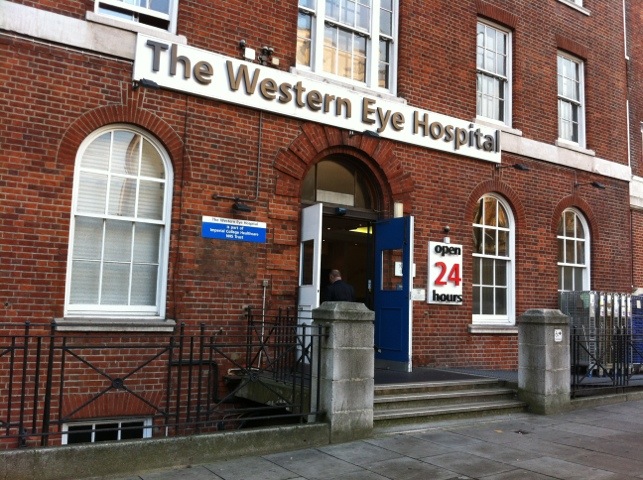
I left home at 7.00am this morning to get the train to London Paddington as today is my yearly eye hospital check up at the Western Eye Hospital nr Paddington. The train is absolutely crammed and I have someone sat next to me that really does need a bath (sorry had to be said). The train journey is fairly quick so I should arrive by 8.30am as the train goes direct.

20111117-085436.jpg

My so called appointment is 9.10am but I could almost guarantee they will be running late.

Firstly I see a nurse who asks about my general health then checks my vision as would an optician. Next I have drops in the eye to dilate the pupil for the photographer to take a picture of the back of my eyes. Finally I see the Consultant who has a look at the pictures and my eyes to determine if they are ok or not – panic !!

Hopefully everything is ok as I have already had two Vitrectomy operations and 10,000 laser burns in each eye to treat Pre Proliferative Retinopathy . So I have basically had all the treatment possible but my eyes have been stable now for probably 5+ years apart from the operation side affects.

I will of course let you know how I get on and would really appreciate your experiences regarding eye problems.

Bye for now.

Read Full Post »


Hi all,

So the end of British Summer time has finally hit us all with vengeance and at 5.00pm tonight it was almost dark which is awful.

As you may already know I have had numerous trips to eye clinics due to suffering with Diabetes Retinopathy for the past 7 years which is really awful and was a real scary shock when I was first told, it was Vision Express that actually discovered the problem and instantly booked me into my Diabetes eye clinic. The problem really started after I had small blood vessels at the back of my eyes burst which affected my vision and made it very cloudy in both eyes. The treatment started with laser to burn around the blood vessels which prevents any new weak blood vessels from forming which then burst. Laser itself is very uncomfortable indeed and I have had approx 10,000 burns in each eye which I am told is the limit but this does seem to have stopped the bleeding which is great news and I am so thankful to the Eye Specialists. After all the laser it still left my vision cloudy so meant I had to have what’s called a Vitrectomy in each eye which basically entails having the clear jelly in your eye removed (Your eye replaces this fluid), I can honestly say this operation is not nice at all and means you have dissolvable stitches in your eyeball (Gross I know). Having said all that If this had not been done I would certainly not be typing this Blog even though one eye has very poor vision and both eyes have awful night vision.

So to the present day – my eyes seem to be stable at the moment and my latest eyesight test did not show any problems, even my prescription had not changed apart from my short sight vision which has got slightly worse. My next Diabetes eye check up is at the Western Eye Hospital in a few weeks time so fingers crossed I get the all clear but I am a little worried.

One of the worst things I am left with is very poor small detail reading in both eyes meaning typing Blogs like this I have to have the page zoomed in to make the words larger, damage to my central vision in my right eye meaning details in my right eye is near on impossible to read, also my night vision is really bad and means I am unable to drive in poor light so this time of year is even worse as it is dark late afternoon. It means I have to carry a very bright torch with me that literally lights the whole path/road that cost me a fortune and even then it is really hard to see if I am on my own walking home from work, without a super bright torch I would literally be stuck and please let me know of any pocket torch companies who make super bright torches. We just take our vision for granted and I am also guilty of this in the past.

Thanks for reading and please feel free to comment.

Andrew Borrett

Read Full Post »

« Newer Posts - Older Posts »