Feeds:
Posts
Comments

Posts Tagged ‘insulin’


Claims of 24,000 ‘excess’ deaths from diabetes

(Read online)

Shock statistics for diabetes deaths have been widely reported

20120105-221753.jpg

As many as 24,000 people with diabetes are dying unnecessarily each year, many of the papers have reported today. This shock statistic was a conclusion from the National Diabetes Audit, the first ever report to look at deaths from the condition.

While this is a large number of deaths, it must be viewed in context – millions of people live with this potentially life-threatening long-term illness, yet it can be managed safely.

The National Diabetes Audit suggests that in England there are about 24,000 ‘excess deaths’ a year in people with diagnosed diabetes. This means that each year, around 24,000 more deaths occur among people with diabetes than would be expected to occur if their mortality risk was the same as that of the general population. A press release from the NHS Information Centre, which published the audit report, said these deaths could be avoided through better management of the condition.

What other risks did the National Diabetes Audit find?

The study found that the risk of death for a person with type 1 diabetes (where the insulin-producing cells of the body do not work at all) is 2.6 times higher than that of the general population. For people with type 2 diabetes (where the body does not produce enough insulin, or the body’s cells are not sensitive enough to insulin) it is 1.6 times higher.

In younger people, the difference in mortality rates is even bigger. For example, women between 15 and 34 years of age who have type 1 diabetes are nine times more likely to die than women in the general population, and women of this age with type 2 diabetes are six times more likely to die.

The report also found a strong link between deprivation and increased rates of early death. Among under-65s with diabetes, death rates among people from the most deprived backgrounds were double that of those from the least deprived. Death rates also vary according to where people live; London has the lowest mortality rates from both type 1 and 2 diabetes, while the highest mortality rates were in the north east of England.

The study’s lead clinician Dr Bob Young, consultant diabetologist and clinical lead for the National Diabetes Information Service, said, “For the first time we have a reliable measure of the huge impact of diabetes on early death. Many of these early deaths can be prevented. The rate of new diabetes is increasing every year. So, if there are no changes, the impact of diabetes on national mortality will increase. Doctors, nurses and the NHS working in partnership with people who have diabetes should be able to improve these grim statistics.”

What is the National Diabetes Audit?

The news is based on the National Diabetes Audit (NDA) Mortality Analysis 2007-2008. This report was prepared in partnership with various trusts, including The Healthcare Quality Improvement Partnership (HQIP), which promotes quality in healthcare, and the NHS Information Centre, the official source of health and social care data and information for England. The NDA covered four key components of the government’s National Service Framework (NSF) for Diabetes:

checking whether everyone with diabetes was diagnosed and recorded on a practice diabetes register
looking at whether those registered are receiving key elements of diabetes care (such as regular checks of blood glucose levels, or for protein in the urine)
looking at the proportion of people registered to have diabetes who achieve the treatment targets for glucose control, blood pressure and blood cholesterol, as defined by NICE
looking at the rates of acute and long-term complications of people with diabetes, including deaths from the condition, the focus of the current report
As part of this GP audit, all primary care trusts contributed data from 5,359 GP practices on 1.4 million people with diabetes. This figure represents 68% of the 2.1 million people estimated to have diabetes in England in 2007-2008 (the participation rate). The current analysis focuses on mortality from the condition, and has therefore also linked data from the NDA to formal death notifications through the NHS Information Centre Medical Research Information Service (MRIS) in order to include data for those people with diabetes not included in the GP audit.

What was the report’s main finding?

By following up the ‘cohort’ of 1.4 million people with diabetes over the next year, the researchers found 49,282 deaths. As the ‘participation rate’ (see above) was 68%, taking the estimated prevalence of diabetes in England, it was estimated that the total annual number of deaths of people with diabetes was between 70,000 and 75,000. This represents about 15-16% of the 460,000 deaths that occur annually in England.

Researchers estimated that in total there were about 16,000 more deaths among people with diabetes than would been expected if their mortality risk was the same as the general population. By linking these results to records of national death certificates (in order to include people with diabetes who did not participate in the audit) they estimated 24,000 excess deaths each year in people with diabetes.

The risk of death for patients with type 1 diabetes was estimated to be 2.6 times higher than that of the general population, and for people with type 2 diabetes the risk was estimated to be 1.6 times higher. Across the country there were variations in mortality, from 1,852 deaths out of 100,000 people with type 1 diabetes in London to a high of 2,351 out of 100,000 in the northeast. For type 2 diabetes the figures ranged from 1,246 out of 100,000 in London to 1,668 out of 100,000 in the northeast.

Why are so many people dying of diabetes?

The analysis itself did not look at the specific causes of death among people with diabetes. However, it is widely recognised that without proper management of this condition, there is a higher risk of death from several causes including critically high or low blood sugar, heart failure or kidney failure.

Diabetes is a long-term condition that affects the body’s ability to process glucose (sugar). Normally the amount of glucose in the blood is controlled by the hormone insulin, which helps break it down to produce energy. In people with diabetes, there is either not enough insulin to process the glucose or the body’s cells do not respond appropriately to the insulin produced. This results in glucose levels building up in the blood.

There are two types of diabetes: type 1 and 2. People with type 1 diabetes do not produce any insulin. People with type 2 diabetes do not make enough insulin, or the body’s cells are not sensitive enough to insulin. Having either type puts people at increased risk of several serious complications, including heart disease and stroke, circulation problems, nerve damage, foot ulcers, blindness and kidney damage.

It is important to note that this audit measured deaths among people with diabetes – it did not show whether diabetes caused their deaths. For example, diabetes is a risk factor for cardiovascular disease such as heart attack or stroke. Also, other cardiovascular risk factors that often co-exist in people with diabetes, such as overweight or obesity or high blood pressure. It is not possible to tell the direct cause of death from this data.

How is diabetes usually managed?

Diabetes management aims to keep blood glucose levels as normal as possible. People with type 1 diabetes need to have daily injections (or administration by pump) of insulin.

In people with type 2 diabetes, management depends upon the severity of the condition. A healthier diet and lifestyle alone can sometimes control the condition in people with early stage disease, although most people with type 2 eventually need to take medication to control their blood sugar. Some people with type 2 diabetes may also eventually need to take insulin. Medication may also be needed to reduce other associated risk factors for cardiovascular disease. For example, medications to reduce high blood pressure or control cholesterol.

Self-management of this condition is also crucial. People with diabetes need to be aware of and monitor blood glucose levels, maintain a healthy weight, eat a balanced diet, avoid smoking and have regular health checks.

How can these deaths be prevented?

Experts agree that people with diabetes can live long and healthy lives and reduce their risks of complications through appropriate self-management, as outlined above.

The charity Diabetes UK says that people with diabetes can sometimes feel overwhelmed with information about all the healthcare they require. Diabetes UK has drawn up a checklist of 15 ‘healthcare essentials’ to help people understand what care they should receive to reduce the risk of complications. These are:

get your blood glucose levels measured at least once a year
have your blood pressure measured at least once a year
have blood fats (cholesterol) measured every year
have your eyes screened for signs of eye damage (retinopathy) every year
have your legs and feet checked annually
have your kidney functions monitored annually
have your weight checked and your waist measured
get support if you are a smoker on how to quit
receive care planning to meet your individual needs
attend an education course to help you understand and manage your diabetes
receive specialist paediatric care if you are a child or young person
receive high quality diabetes care if admitted to hospital
get information and specialist care if you are planning to have a baby
see specialist diabetes healthcare professionals to help you manage your condition
get emotional and psychological support from specialist healthcare professionals
Not every healthcare essential may apply to children with diabetes who may have different requirements.

Do I need to worry about this if I have diabetes?

The figures are alarming but they do highlight the need to make people with diabetes aware of the importance of self-management and of obtaining the level of healthcare they require to help them manage their condition. With the right care and support, people with diabetes can go on to live long and healthy lives.

If you have diabetes, key ways to delay or prevent complications include:

maintaining a healthy weight by eating a balanced diet and taking regular physical exercise
not smoking
checking your feet every day
having regular check-ups with your diabetes care team.
Links to the headlines

24,000 diabetes deaths a year ‘could be avoided’. BBC News, December 14 2011

Diabetes report reveals 24,000 a year die from condition avoidably early. Guardian, December 14 2011

Up to 24,000 Britons with diabetes dying unnecessarily due to poor care. Daily Mirror, December 14 2011

Simple rules to beat diabetes. Daily Express, December 14 2011

Further reading

NHS Information Centre: National Diabetes Audit Mortality Analysis 2007-2008 (PDF 1.3Mb)

Press releases
NHS Information Centre: Up to 24,000 people with diabetes suffer an avoidable death in England each year. December 14 2011

Diabetes UK: Report shows each year 24,000 people in England with diabetes suffer avoidable death. December 14 2011

Read Full Post »


FRIDAY, 2 DECEMBER 2011

Fifth Annual Insulin Pumps Association conference by Anna Presswell Insulin Independent.

Last week (apologies for the delay) I was invited by INPUT to attend the Fifth Annual Insulin Pumps Association conference in Manchester. Never one to miss the opportunity to jump face-first into events like this, I gladly accepted and before I knew it was boarding a train to Manchester and syncronising hypos with Lesley of INPUT fame.

On arrival and another spookily timed skyrocket out of (ahem) ‘optimal range’ on both our parts, Lesley and I were having dinner with some of the many other attendees at the conference including several bods from Roche and some healthcare professionals from a number of different hospitals around the country. It wasn’t long before one of the sales managers from Roche had spotted that I was on a Medtronic pump and had begun their sales pitch at light speed. Frankly the Combo pump and blood glucose meter did impress, seeing as I was rifling through my bra for most of the duration of the meal to adjust insulin doses as each delicious (and very non-low carb) course came out, while all those with the combo remote controls were testing and bolusing (taking a shot of insulin for their meal) with ease. Truthfully I think the next pump for me will be a tubing free one seeing as the tubing is, for me, the biggest drawback of pumps in general. But it did show me that while my beloved Paradigm VEO was top of the market (again, just in my opinion) when I got it two years ago (is it really two years already??), it has been somewhat overshadowed by the newer sexier pumps on the market in recent years. Funny how quickly things move nowadays isn’t it? Our diabetic predecessors must have been using metal and glass syringes for the 50 year mark before hypodermics came in, and now within 2 years the sexy new pump you once sported is the equivalent of the cassette tape to the ipod or what the horse and cart is to the Porsche.

It was with an eager attitude that I met Lesley for a suprisingly low carb but tasty full English breakfast the next morning and with that the conference was under way.

The exhibitions room was as always packed with impressive stands. But this being the first pump specific conference I had attended I was keen to get stuck in, knowing full well that the newer model Omnipod would be on show and I was hoping, the Cellnovo as well. I’d heard rumours about the Animas display which can be seen at these events and true to form, the most eye-catching stand had to be theirs, with a fish tank fully equipment with water, lights, real fish, plants and yes that’s right, their insulin pump (!) suspended mid-tank. Although most pumps posit the same level of waterproofness (fairly confident that isn’t in the dictionary) Animas are one of the only (if not the only) pump provider who are happy to guarantee their pump when submerged in shallow water. Great waterproofity? Waterprooficiousness? What IS theword!

There were also displays from Medtronic, Adanced Therapeutics (the company who bring the Dana pump and Dexcom CGM to the shores of the UK), Omnipod and my personal holy grail, Cellnovo.

I had a great chance to have a talk with Gary from Omnipod, who went some way to reassuring me that the teething problems I had experienced when I first made enquiries about their system had now been ironed out, thanks to a multiplying workforce and a chance to get their feet under the British market table. The new pod is certainly smaller than the old one and a contender against the much smaller and sleeker Solo (don’t get too excited, its not avaialble here yet) and Cellnovo (watch this space, VERY soon). In truth I still have my doubts about Omnipod but only based on the fact that Medtronic’s customer service still is – as far as I am concerned – second to none. That being said, the mention of Medtronic brings me on nicely to the holy grail of the day, the Cellnovo.

For anyone concerned about customer service, one of the head honchos at Cellnovo used to be on the Medtronic team and not just any team at that. She started the whole blogger forum craze and was, from what I hear, absolutely a key player in getting Medtronic’s customer service at the very high level it is, which has been continued and pushed forward by their Justin Gray. So for a ‘new’ company who are just about to release their pump in the imminent future, I have a lot of faith they will do well. This, brings me to their pump.

I have looked at the website god knows how many times, but had until this point never had an opportunity to see it. ‘Miniscule’ is probably the most fitting term, considering inside it there are hundreds of parts, computers, insulin resevoirs and so on and so forth, that allow it to do it’s job. It is technically a patch pump as the pump itself sticks to the skin using a velcro attachemnt, but the tubing between the pump and cannula can be varied allowing you to continue to put it in a pocket if you wish. That may sound like it defeats the point, but I have come across suprisingly large amounts of people who say they would like the option of hiding the pump if they were wearing a slinky dress or tight fitting shirt. I don’t share these needs, but completely understand the concern. With the Cellnovo, that is possible. It is also equipped with a smart-phone like handset which allows real time measuring of impact of activity on BGs, acts as the remote control for the pump and frankly for the growing numbers of young people on pumps, will be a fantastic selling point. Considering for the most part young people are already well familiar with touch screen phones and wireless handsets.

It was great to see the Cellnovo and their team in action and provided there are no horror stories about the pump failing or customer service nightmares, I imagine this will be the kind of pump I aim for next, albeit in two years time!

But the reason above all else that I was there,was to attend the conference and hear the speakers. The name of this year’s conference was ‘From Cradle to Grave’ and the overall message of the conference was that insulin pumps can be used in ANY portion of society and at ANY stage of life. We were given case studies of people at end-stage renal failure who were on pumps, babies as young as days old who we were shown photos of (which to be honest I found a bit shocking due to the very tiny body connected to the pump, although the shock was more a feeling of sadness that someone so ‘new’ had to already live that life). We talked about the benefits for pregnant women, children and pretty much every group you could imagine.

I see a specialist team at Portsmouth who are without a doubt a proactive and insulin pump friendly team without whom I would not have been on the incredible journey I have travelled in the last two years, but without a doubt they had nothing on the speakers at these conferences. In Cambridge they purport to have 50% of all their Type 1 child patients on pumps, which without a doubt blows the NICE benchmark out of the water and deeply puts to shame all those PCTs who are yet to welcome and encourage pumps for their most at risk patients. The word ‘proactive’ doesn’t even begin to cover how forward thinking many of these professionals were. When I arrived at Cellnovo, the chair of the conference was even stood next to me (although I didn’t know who he was yet) asking questions about what the benefit to the patient, this pump would have. The benefit to the patient; have you ever heard such madness! In some areas they seem to disregard even the benefit to the PCT, let alone the humble patient!

We had a fantastic talk from Candice Ward from Cambridge University Hospital about where the artificial pancreas project was going and how CGM and pump technology could well be the key components which will significantly impact the lives of diabetics. Although it was clear she felt this was not quite an imminent success, she did intimate that it was on the horizon and creeping closer to us day-by-day. My brain has a little party whenever someone says that.

All in all it was a fantastic day and the messages I took away were:

Don’t buy it if you are told your clinic doesn’t do pumps, talk to INPUT.

No matter your age, demographic or favourite day of the week, ASK THE QUESTION OF YOUR SPECIALIST

No-one is too young, too old, or ‘too far gone’ (whatever that means) not to benefit from a pump

Cellnovo are the ones to watch

There ARE some highly proactive hospitals in the country, so ask about changing if your clinic fob you off.

All in all a brilliant day.

Read Full Post »


The importance of regular eye checks – by Tim Harwood

Author: Sarah Steel at Diabetic Friend

Why is it important for diabetics to have regular eye tests?
As diabetics we constantly have all kinds of advice thrown at us in an almost threatening kind of way! We are told that unless we follow certain pieces of advice we risk all sorts of bad things to us … Such advice comes at us from many different people including the GP, diabetic nurse and the podiatrist. Well unfortunately this article plans on doing very much the same, although the person doing the advising is the Optometrist!

Depending on the area you live in, most diabetics should be on some sort of diabetic retinal screening programme which your GP should enrol you on. Diabetic retinopathy is the biggest cause of blindness (apologies for this depressing fact!) in the working age range and this is why it is so important that you have regular checks for it. Clearly this is the negative side of diabetic retinopathy but the positive side of diabetic retinopathy is that it shouldn’t be the biggest cause of blindness in the working age range as it generally can be treated. Providing your diabetic retinopathy is picked up early enough by either your Optician or retinal screener is it likely to be treatable.

What exactly is diabetic retinopathy?
Diabetic retinopathy is effectively a disease of the retinal blood vessels at the back of your eyes. The result of the disease is that the blood vessels become weakened and are therefore are more likely to leak and haemorrhage. If this occurs then there is an interruption to the blood flow (and therefore oxygen) of the retina and consequently vision can be lost. In addition to this, if the diabetic retinopathy is left untreated the retina will produce new blood vessels in response to a lack of oxygen in the retina. These new blood vessels are however even more fragile and ‘leaky’ then the normal blood vessels, further exacerbating the problem.

Having said this, not all diabetics suffer from diabetic retinopathy. Around 40% of diabetics will suffer from diabetic retinopathy to some degree and this most likely if you suffer from type 1 diabetes. The single most important factor in reducing your chances of developing retinopathy is by controlling your blood sugar levels. High blood sugar levels for long periods of time will put you at a much higher risk of developing the disease.

Why have regular eye tests?
The main problem with diabetic retinopathy is that you may have it right now and be completely unaware that you do. There may be diabetic retinal changes that are only affecting your peripheral vision and so consequently you will not notice it. These peripheral changes tend to accumulate and then all of a sudden your central vision becomes damaged and there is very little that can be done about it. By attending for regular eye tests/retinal screenings, the Optometrist can detect the early retinal changes which can be treated before they affect your central vision. Unfortunately once your central vision is damaged there is often very little that can be done about it. If there are significant retinal changes in your peripheral retinal then you will be assessed to see if laser treatment will be beneficial to you. This is not however the laser eye surgery that you see advertised on the TV as it in no way corrects the prescription in your glasses. The aim of diabetic laser treatment is to prevent your diabetic retinopathy from affecting your central vision. In summary your Optician can pick up and monitor any early diabetic retinal changes and act on them before they affect your central vision. By attending for an eye examination every year you are massively reducing your risk of developing any visual problems. If you combine this with keeping a tight control of your blood sugar levels, there is no reason that you should ever have any diabetic retinopathy problems.

This article was brought to you by Optometrist Tim Harwood. Tim has monitored people with diabetic retinopathy for over 10 years and has seen significant improvements in the treatments that can be offered. Tim also writes articles for his own website Treatmentsaver which covers a whole range of topics including a laser eye surgery forum for which he is the moderator. I hope this article has made you realise that by taking a few simple steps you can significantly reduce your risk of developing the disease. This article was not meant as a lecture more as in inspiration that if you do right things your vision should be unaffected for life!

Read Full Post »


20110929-210706.jpg

Medtronic Junior Cup 2011 Geneva.​

On the 26th-28th August the 5th edition of the Medtronic Junior Cup took place at the Stade du Bout du Monde in Geneva, Switzerland. Competing in this event were 250 children all with Type 1 diabetes, representing 15 countries and 10 of those children aged between 10-14 were the Junior Team for Great Britain. These 10 talented footballers accompanied by their parents were chosen from over 100 applicants to an all expenses paid weekend of football and fun. And have fun they did! Frazer Briggs (13), Abigail Lewis (13), Alex Smith (12), Mark Mathison (13), Joseph Smith (10), Jordan Burke (14), Jack Dickson (14), Jack Delicata (11), Amit Sood (11), Aaron Dodds (12), all turned up in Geneva ready to win Junior Cup 2011.

The event kicked off on the Friday evening with guest appearances from a talented group of young footballers exhibiting their ‘keepy uppy’ skills choregraphed to dance music, a fabulous troupe of teenage cheerleaders which brought a touch of glamour to the occasion and of course the much loved Medtronic mascot, Lenny the Lion whose dance moves put JLS to shame! Then came the part of the evening for the live draw and GB drew Italy for their first game. It has to be said that the GB team were rather quiet in comparison to the Italians who pretty much sang football songs throughout the whole weekend but what the GB team may have lacked in song voice they most certainly made up for on the pitch!

On day one of the tournament they easily defeated the singing Italians in their first game. After this their confidence soared and there was no stopping them. Considering they had never met each other before, let alone played together prior to this tournament these young footballers’ team spirit and natural talent came flooding through and they went on to win every one of their games on day one placing them a strong first on the leaderboard. As part of team GB we had of course our very enthusiastic parents cheering their kids on, our fabulous coach John Pemberton a Clinical Specialist at Medtronic and a diabetic pump user himself who knows a thing or two about football and Claire Pesterfield a DSN from Addenbrookes Hospital whose role at Junior Cup was to ensure at all times that the children were fit and healthy on and off the pitch as well as donning on her Art Director’s hat for the Lenny Carb Counting Competition where the children had to paint a 1 x 1 metre canvas of Lenny representing Great Britain.

Buoyed by the success of their first day, team GB and parents attended the evening lakeside barbeque and disco party with Lenny, where the kids enjoyed activities such as the human football table of which we couldn’t get them off and ended with a firework finale over the lake.

Second day of the tournament continued in much the same vein as the first with a high standard of playing exhibited by the GB team. Now through to the semi finals the competition most definitely got tougher for our young footballers but goals scored throughout the tournament by Abigail Lewis (2), Jordan Burke (1), Frazer Briggs (3), Jack Dickson (12) and a nifty hatrick by Aaron Dodds against Ukraine plus one other, saw team GB triumphantly through to the final with The Netherlands. After an early goal by the giant Netherlands team followed in quick succession by several more, this Junior Cup final was all over for team GB and as the final whistle blew our team of young footballers had to settle for runners up position. However disappointment didn’t last too long and once they had collected their players medals and a very large shiny trophy at the award ceremony, team GB flew home to the UK tired but extremely excited and full of tales of an amazing weekend which according to them all and their delighted parents they will remember for the rest of their lives.

The Medtronic Junior Cup yet again triumphed in connecting kids with diabetes together, to show them that their disease cannot stand in the way of their dreams and that living a normal life is theirs for the taking. The weekend provided parents with the opportunity to talk to other parents and exchange experiences regarding their kids and their diabetes as well as help educate them all with the Carb Counting workshops and practical advice. It would seem that Facebook and X-Box are a great way to keep in touch since the tournament and I have heard that since our footballers have returned home, their footballing skills and confidence are soaring.

Go team GB you did us proud!

Read Full Post »


Good evening all,

I hope you are all keeping well ?

So tomorrow is my annual Diabetes check up with my GP and of course the dreaded blood test for Hba1c, Cholesterol etc as it us quite a list. My last Hba1c was 7.1 and that was almost a year ago so we shall see if it has improved or got any worse (fingers crossed). I will need to wait a week for my results so I will keep you all posted.

I don’t mind my Diabetes check ups so much as they usually go ok, I do however panic when going to the Eye Clinic as I have had quite a few eye operations. I have had 10,000 laser burns in each eye and a Vitrectomy in both eyes which are not pleasant operations at all. I have lost some central vision in my right eye and have really bad night vision which means I can’t drive in poor light, walking is bad enough. So when I go about my eyes I always have in the back of my mind are they going to say my eyes are worse or even that I may lose my sight which is really scary.

Anyway now I have cheered you all up I am off to bed – please let me know your last Hba1c, Your age, Are you on a Pump or not and how long have you had Diabetes as it would be good to know for us all.

More comments on my site would also be great.

Take care
Andrew 

Read Full Post »


Animas Vibe gains CE mark approval

The Animas Vibe has gained the CE mark in Europe. It is an integrated CGM from Dexcom and insulin pump from Animas which allows up to seven continuous days of sensor wear. For more information see below:

http://Animas Vibe

I am very intrigued/excited to hear what pumpers think of this new Animas Vibe Insulin pump with CGM as the pump still looks like the original Animas 2020 pump with a few software changes possibly ?

Please do let us all know if you actually are the luck owner of the Vibe ?

Read Full Post »


Medtronic Enlite Sensors Reviews Are in

MIKE on MAY 11, 2011 in DIABETES NEWS, FEATURED by Diabetes in Spain.

http://www.diabetesinspain.com/featured/medtronic-enlite-sensors-reviews-are-in

So recently Medtronic released the much talked about Enlite Glucose Sensor to much chatter and fan fare. Unfortunately for the folks in North America said sensors are still awaiting FDA approval, sorry guys!

I was fortunate enough to see the new sensor up close and personal when visiting the Medtronic European HQ back in March but as I don’t use a pump, I’m assured that I am light years away from a CGM.

Meanwhile back over in the Europe the sensors have hit the shelves are some reviews are in: Go check them out!

Anna over at http://insulinindependent.blogspot.com/ reviewed the sensor here Medtronic ‘Enlite’ CGM sensor launch just don’t mention “bum cheeks”.

Alison over at http://www.shootuporputup.co.uk/ remarked Did the sensor (En)lite up my life?

Read Full Post »


Let there be (En)Lite – Medtronic launches Enlite sensors in UK today

18 April, 2011 in Kit & equipment by Neville the Newshound – Shoot Up Or Put Up.

The day has finally come. Ring the bells, dance in the streets and drink til dawn to celebrate the arrival of some new diabetes tech. Medtronic’s new and improved CGM sensor – Enlite – has ticked all the legislative boxes and is being launched today in the UK.

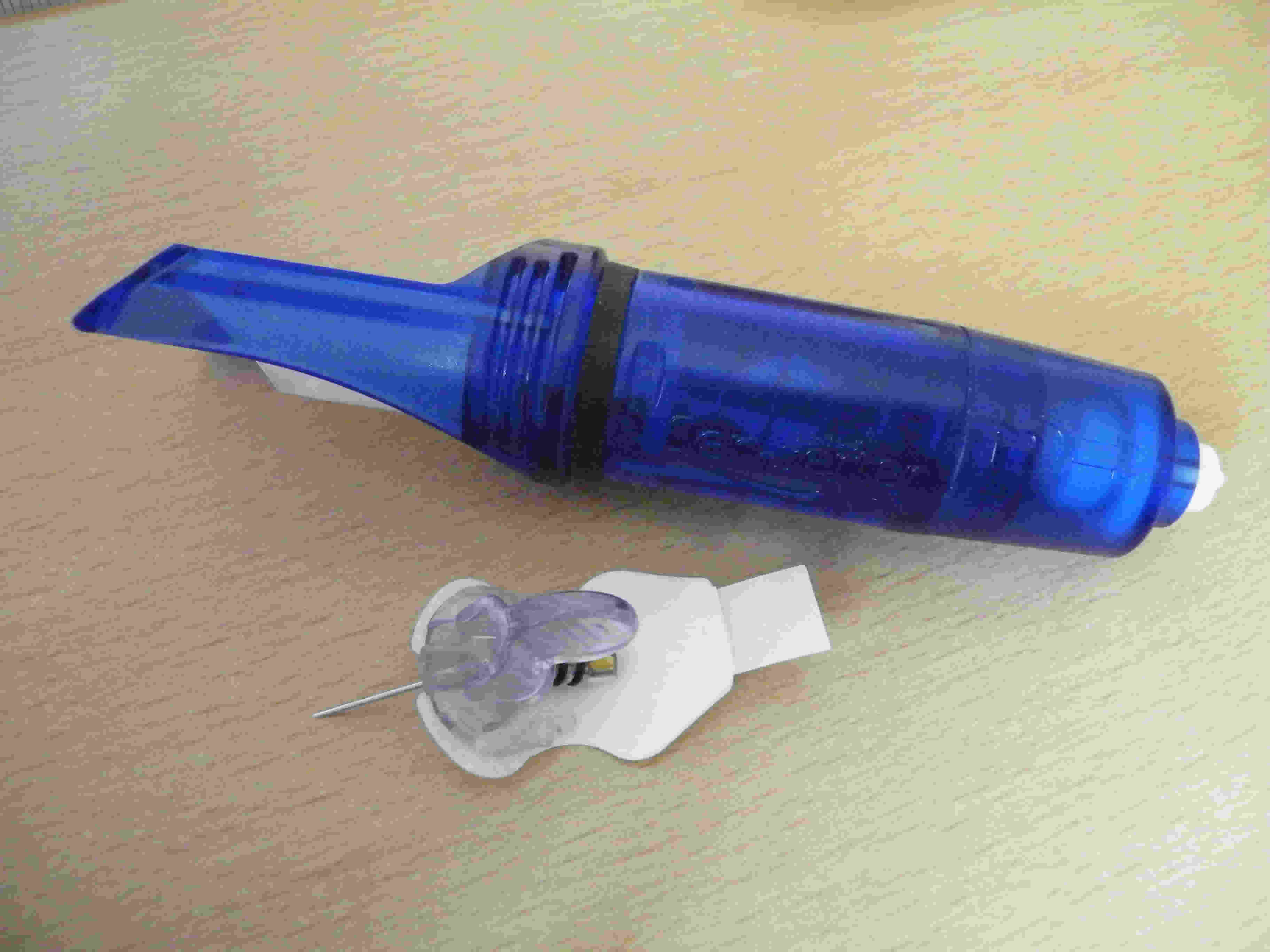
According to the marketing propaganda “The Enlite Sensor combines greater comfort with improved glucose sensor performance in both overall accuracy and hypo detection”. Plus the sensor is thinner, shorter, approved for use for 6 days and comes with a new and improved insertion device, which looks less like a harpoon gun than the old one. And the really big news – it no longer has the 3ft long insertion needle that scared all but the most hardened needle poker.

 
Ye olde CGM sensor with monster insertion needle and harpoon gun (sorry, inserter)
The much smaller Enlite sensor (attached to the Minilink transmitter)
 
The new and less scary Enlite sensor inserter

Rather than struggling to get the correct angle of insertion which could be a bit of an issue with the old sensors, the new ones are inserted vertically, like a Quickset, so that should be one less thing to worry about. Also, the insertion needle, as well as being shorter and thinner has been polished, so it’s smoother too. Of course, when it comes down to it, you’re still shoving a bit of metal into your tender flesh so it’s never going to be a pleasure, but the stats say that 85% of testers found the insertion to be pain free. Even with a huge pinch of salt, it certainly seems to be a great improvement.

This dog knows that money is always a big issue when it comes to CGM. The new sensors are of course more expensive than the old ones (come on, did you seriously expect anything different?) but are cleverly priced to still be cheaper than the equivalent CGM sensors from Dexcom and Abbott. Wow, it’s like there’s a marketing strategy behind this stuff!

When Tim and Alison had a play with the new sensor recently, it certainly looked simpler and more comfortable to insert. And the improved accuracy claims are impressive. The proof of the pudding is of course in the metaphorical eating – do said sensors accurately detect the post pudding spike?  This dog is writing this piece because he knows that Alison is busy on the phone to the Medtronic order desk this morning to get her grubby hands on some of the new sensors and rumour has it that Tim might also be giving them a try soon…so watch this space.

Read Full Post »


Hi.

Welcome to my New Blog site My Pump Blog and can I first say thanks for looking.

As you may or may not be aware I currently have another Diabetes Site called www.mypump.co.uk which is going very well indeed and that site was created to share as many useful Diabetes products or products I like with a small review.

I have now decided to try my very best to create a New Blog site to enable us all to chat or leave comments about anything we feel we would like to share with the Diabetes community.

So please do keep coming back and tell as many people with Diabetes as you can about my site.

Thank you so much.

Andrew

Read Full Post »

« Newer Posts